

Twenty thousand shillings used to be the easy budget in Kenya’s phone market. Walk into any shop, pick almost anything in that range, and you’d leave with a decent device. That’s no longer quite true. Component costs have gone up, DRAM prices spiked through 2025, and the sweet spot has shifted from “any phone will do” to “which phone actually fits what you need.”
Quick answer: the best phones under KSh 20,000 in Kenya right now are the Infinix Hot 60i (best overall value, from around KSh 15,000), the Samsung Galaxy A17 4G (best long-term software support, around KSh 19,400-20,500), the Redmi Note 14 4G (best AMOLED display for the price, around KSh 19,000-22,000), and the Vivo Y21d (best battery and durability, around KSh 18,000-22,500). Below that price ceiling, the Samsung Galaxy A07, Redmi 15C, and Tecno Spark 40 cover the tighter end of the budget.
Prices below were checked against Jumia Kenya, Phone Place Kenya, and official brand storefronts in July 2026. Storage variant, colour, and whether you’re buying online or in a CBD shop all move the price by a few thousand shillings either way, so treat these as a guide and confirm before you pay.
Selling a phone yourself? You can list it free on SokoMix classifieds and reach buyers browsing this exact price range.
Quick Comparison: Best Phones Under KSh 20,000 in Kenya
| Phone | Approx. Price (KSh) | Best For | RAM/Storage | Battery | Main Camera |
| Infinix Hot 60i | 15,000-18,000 | Overall value | 6-8GB / 128-256GB | 5,160mAh | 50MP |
| Samsung Galaxy A17 4G | 19,400-20,500 | Long-term updates | 4-8GB / 128-256GB | 5,000mAh | 50MP |
| Redmi Note 14 4G | 19,000-22,000 | Display quality | 6-8GB / 128-256GB | 5,000-5,500mAh | 108MP |
| Vivo Y21d | 18,000-22,500 | Battery and toughness | 4-8GB / 128-256GB | 6,500mAh | 50MP |
| Samsung Galaxy A07 | 11,000-15,800 | Cheapest Samsung | 4-6GB / 64-128GB | 5,000mAh | 50MP |
| Redmi 15C | 15,300-15,700 | Big screen, tight budget | 4-8GB / 128GB | 6,000mAh | 50MP |
| Samsung Galaxy A16 | 17,500-18,000 | Balanced Samsung mid-tier | 4GB / 128GB | 5,000mAh | 50MP |
| Tecno Spark 40 | 12,500-17,000 | Modern features on a budget | 4GB / 128-256GB | 5,200mAh | 50MP |
| POCO C85 | 12,000-15,000 | Screen size and endurance | 4-8GB / 128GB | 6,000mAh | 50MP |
Best Overall Phone Under KSh 20,000 in Kenya
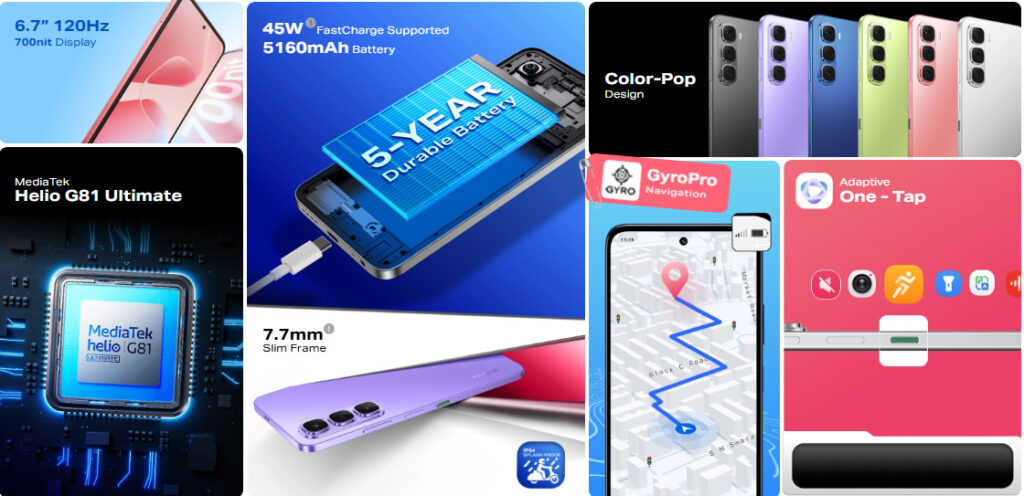
The Infinix Hot 60i takes it, and not by a small margin. At roughly KSh 15,000 for the 6GB/128GB variant and up to KSh 18,000 for 8GB/256GB, you’re getting a 5,160mAh battery, 45W fast charging, a 120Hz display, and a 50MP main camera. Two years ago that spec sheet would have cost you closer to KSh 30,000. It also comes with IP64 splash resistance, which matters more than people think during the long rains.
The MediaTek Helio G81 Ultimate chip inside won’t win any benchmark contests, but it handles WhatsApp, TikTok, M-Pesa, banking apps, and moderate gaming without stuttering. If you sell phones on SokoMix yourself, this is the model buyers keep asking about because the price-to-spec ratio is genuinely hard to beat right now.
Buy this if: you want one phone that balances battery life, storage, and daily reliability without stretching past KSh 18,000.
Best Phones Under KSh 20,000 in Kenya: Full List
1. Infinix Hot 60i
Approximate price: KSh 15,000-18,000
Best for: overall value, students, small business owners
Key specs: 6.7-inch IPS LCD, 120Hz, 6-8GB RAM, 128-256GB storage, MediaTek Helio G81 Ultimate, 50MP rear / 8MP front, 5,160mAh battery, 45W charging, IP64
Infinix keeps proving it understands the Kenyan buyer better than almost anyone else in this range. The 45W charging alone changes how you use the phone day to day. You genuinely can go from near-empty to over half charge during a lunch break, which is the kind of detail that matters when your phone is also your point-of-sale device.
Pros: big battery, fast charging, generous storage for the price, wide retailer availability
Cons: LCD panel isn’t as punchy as an AMOLED screen, camera struggles once the light drops
Best for: WhatsApp sellers, students, anyone who wants the most phone for the least money
Verdict: the safest default pick under 20K right now.
2. Samsung Galaxy A17 4G

Approximate price: KSh 19,400-20,500 (sits right at the ceiling, sometimes just over depending on retailer and storage)
Best for: buyers who keep phones for years
Key specs: 6.7-inch Super AMOLED, 90Hz, 4-8GB RAM, 128-256GB storage, MediaTek Helio G99, 50MP + 2MP rear / 13MP front, 5,000mAh battery, 25W charging
Samsung’s real advantage here isn’t the spec sheet. It’s software support. The A17 4G is promised security updates for years longer than most of its rivals in this bracket, which is worth something if you’re the type who keeps a phone until it physically gives up. The Super AMOLED panel also just looks better than anything else near this price, with genuinely deep blacks and strong outdoor visibility.
Pros: AMOLED display, OIS on the main camera, long software runway, trusted brand for resale value
Cons: the base 4GB/64GB variant can feel tight after a year of app updates, no 5G on this model
Best for: professionals and parents buying a phone for a child who’ll use it for three or four years
Verdict: if long-term reliability matters more than raw specs, this is the pick.
How Much Does the Samsung Galaxy A07 Cost in Kenya?
The Samsung Galaxy A07 4G costs between KSh 11,000 and KSh 15,800 in Kenya depending on the retailer and storage variant, making it the cheapest way into a genuine Samsung device. It runs the same MediaTek Helio G99 chip as pricier Samsung models, just with less RAM and storage.
3. Samsung Galaxy A07
Approximate price: KSh 11,000-15,800
Best for: tightest budgets who still want the Samsung name
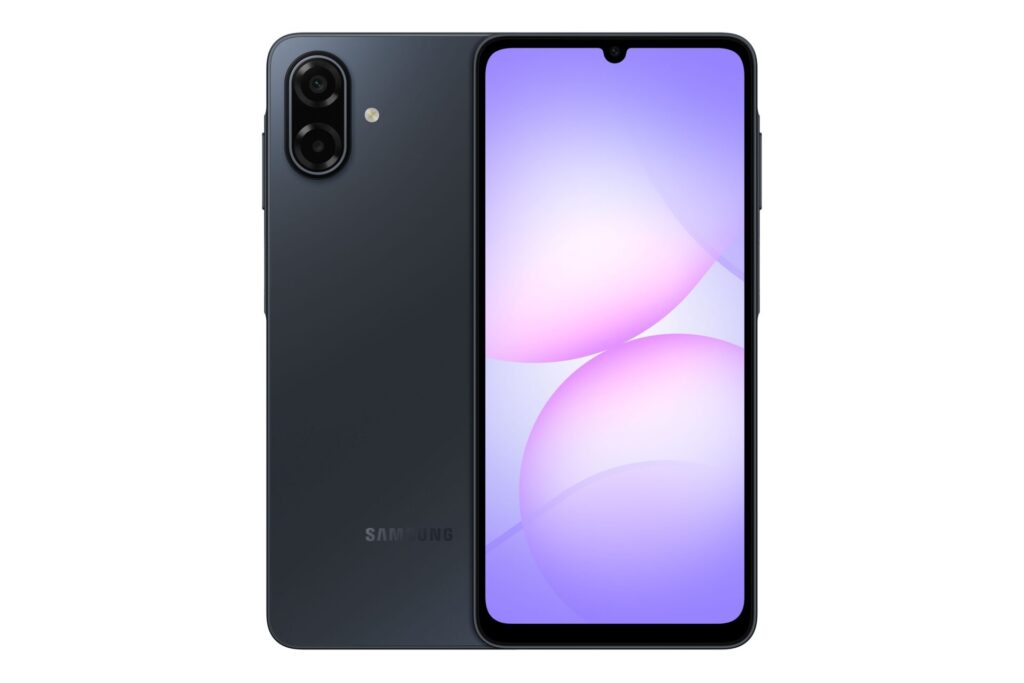
Key specs: 6.7-inch display, 90Hh refresh, 4-6GB RAM, 64-128GB storage, MediaTek Helio G99, 50MP + 8MP rear / 8MP front, 5,000mAh battery, 25W charging
This is where Samsung competes directly with Infinix and Tecno on price rather than winning on polish. You get the brand, the camera performance is solid in daylight, and Samsung throws in several years of security patches. The 64GB base storage is the catch. If you take a lot of photos or run several business apps, budget for the 128GB variant instead.
Pros: Samsung reliability at an entry price, decent daylight camera, good resale value
Cons: base storage variant fills up fast, no fast charging above 25W
Best for: first-time smartphone buyers, parents buying a starter phone
Verdict: the cheapest genuine route into the Samsung ecosystem.
4. Redmi Note 14 4G
Approximate price: KSh 19,000-22,000 (the 6GB/128GB base variant is the one that dips near or just under 20K)
Best for: display quality and camera resolution
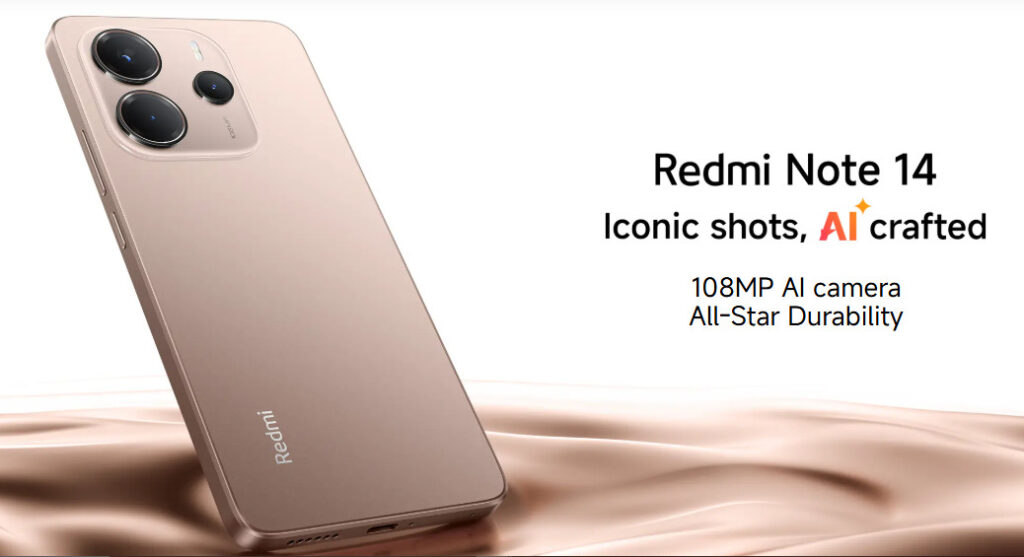
Key specs: 6.67-inch AMOLED, 120Hz, 6-8GB RAM, 128-256GB storage, MediaTek Helio G99 Ultra, 108MP main sensor, 5,000-5,500mAh battery, 33W charging
A year ago this phone felt overpriced for its category. Prices have settled since, and the base configuration now lands right around the 20K mark. The 108MP camera won’t outshoot a flagship, but in daylight it captures noticeably more detail than the 50MP sensors on most competitors here, and the AMOLED screen makes streaming and photo editing genuinely pleasant.
Pros: AMOLED display, high-resolution camera, mature HyperOS after a year of updates
Cons: priced right at the edge of the budget, so shop around before the storage upgrade pushes you over
Best for: content-conscious buyers, anyone shooting product photos for online selling
Verdict: the most complete all-rounder if you can catch it near the lower end of its price range.
5. Vivo Y21d
Approximate price: KSh 18,000-22,500
Best for: battery life and physical durability
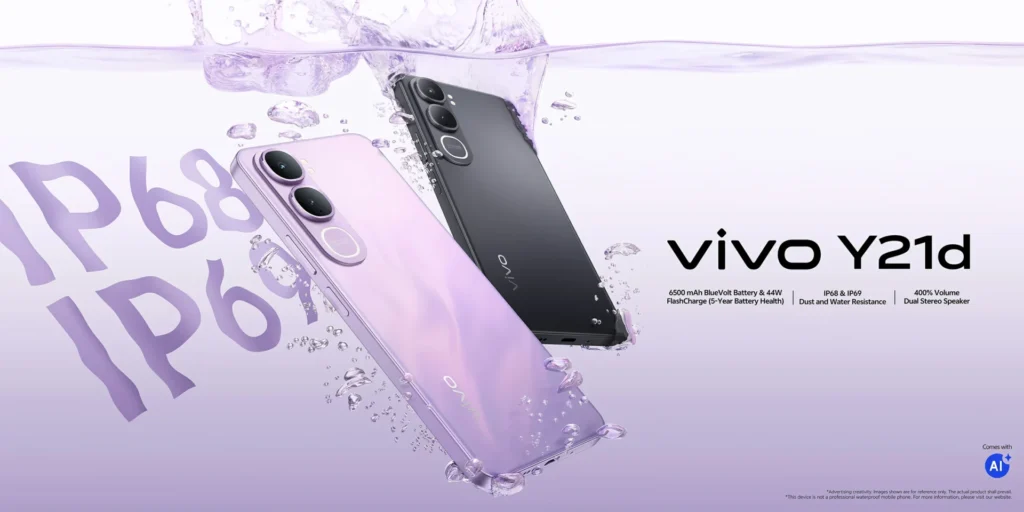
Key specs: 6.68-inch IPS LCD, 90Hz, 4-8GB RAM, 128-256GB storage, Unisoc T7225, 50MP rear / 5MP front, 6,500mAh battery, 44W charging, IP68/IP69+
Vivo built this one for people who are hard on their phones. The IP68 and IP69+ ratings mean it survives dust, splashes, and even brief submersion, which most budget phones simply can’t claim. Pair that with a 6,500mAh battery and you have a phone built for boda riders, field agents, and delivery workers who don’t get to charge on a predictable schedule.
Pros: exceptional durability rating, huge battery, fast 44W charging
Cons: camera setup is basic beyond the main sensor, no headphone jack
Best for: delivery riders, fieldworkers, anyone whose phone takes a beating daily
Verdict: the toughest phone on this list by a clear margin.
6. Redmi 15C
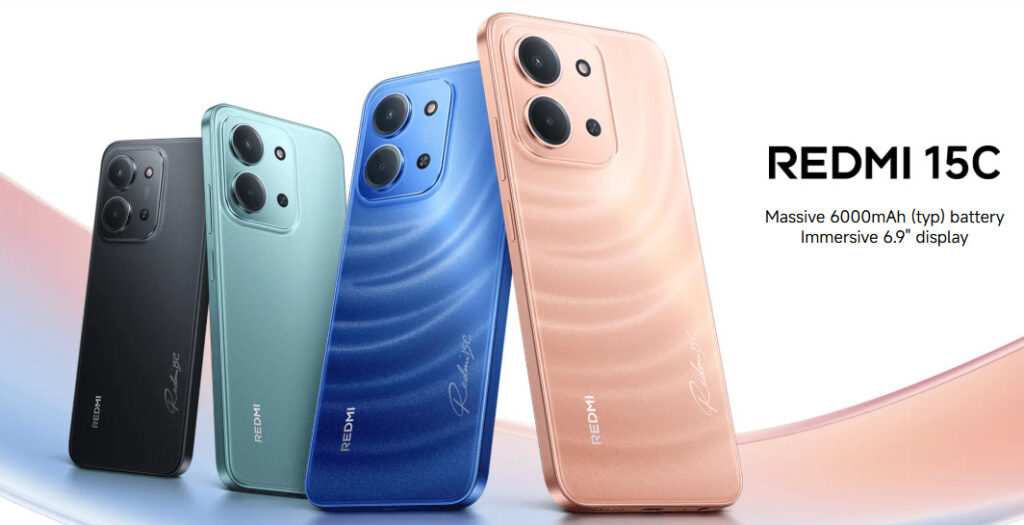
Approximate price: KSh 15,300-15,700
Best for: biggest screen for the smallest budget
Key specs: 6.9-inch display, 4-8GB RAM (with extended RAM), 128GB storage, 50MP rear, 6,000mAh battery
Xiaomi positioned this as the budget option below the Redmi Note line, and it shows in the plainer chipset. What it does deliver is a genuinely huge screen and a 6,000mAh battery, both of which matter more than benchmark scores for most everyday Kenyan use: YouTube, TikTok, long WhatsApp calls, and navigation.
Pros: large display, strong battery capacity, low entry price
Cons: performance ceiling is lower than the Note series, camera is average in low light
Best for: students who want a bigger screen without paying Note-series prices
Verdict: the best screen-to-price ratio under KSh 16,000.
7. Samsung Galaxy A16
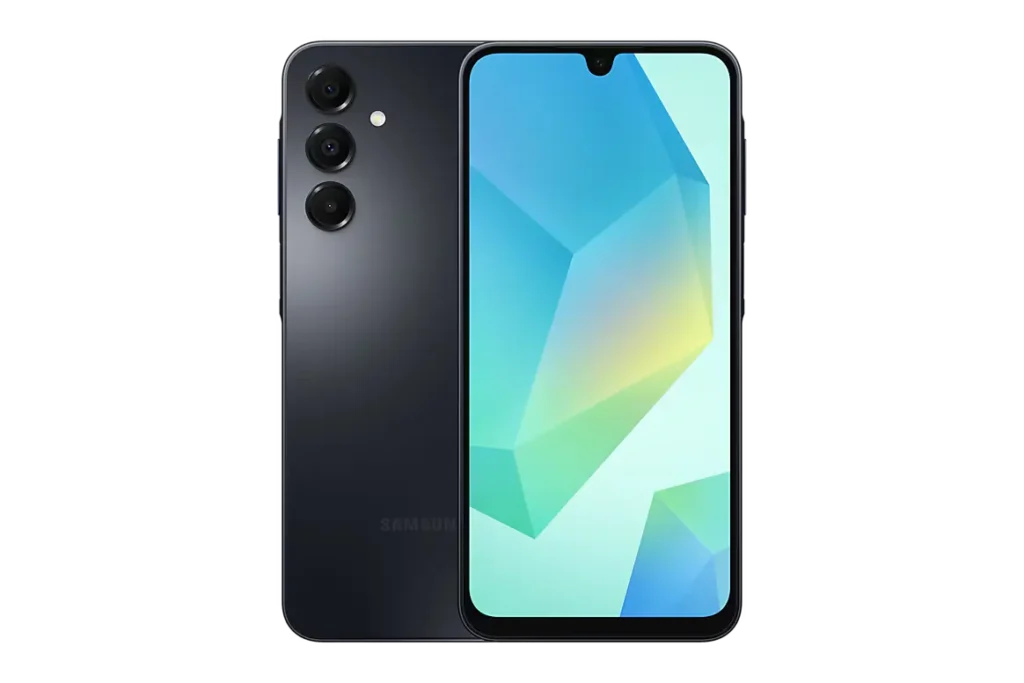
Approximate price: KSh 17,500-18,000
Best for: buyers who want Samsung but skip the A07’s storage limits
Key specs: 6.7-inch HD+, 4GB RAM, 128GB storage, 50MP camera, 5,000mAh battery
Sits neatly between the A07 and the A17 in Samsung’s own lineup. It launches with more storage than the A07 out of the box and a slightly more refined camera pipeline, without reaching the A17’s AMOLED panel or long update promise.
Pros: more comfortable base storage than the A07, Samsung’s camera processing
Cons: LCD panel, not AMOLED; fewer OS upgrades promised than the A17
Best for: buyers who want Samsung reliability without the A17’s price
Verdict: the middle ground in Samsung’s own budget range.
8. Tecno Spark 40
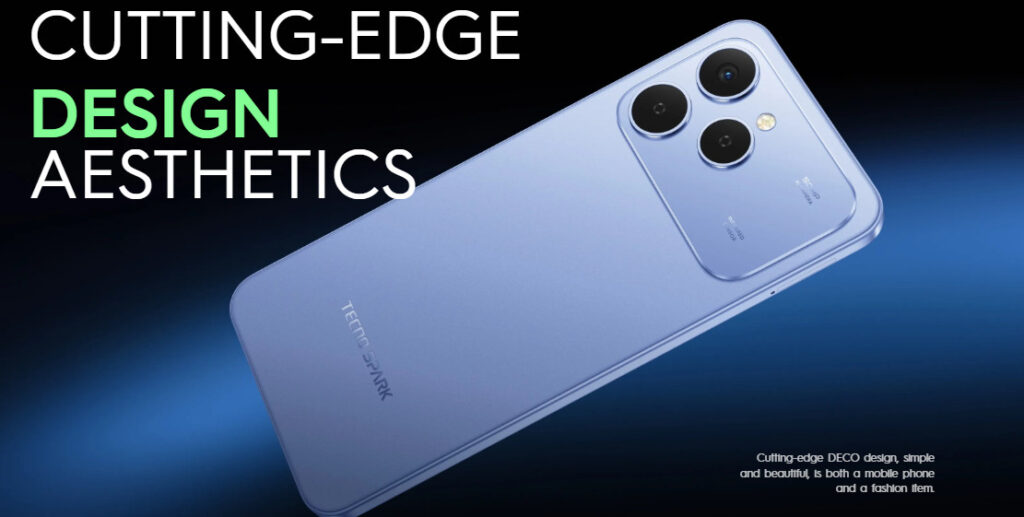
Approximate price: KSh 12,500-17,000
Best for: modern features on the smallest budget
Key specs: 6.67-inch display, 120Hz, 4GB RAM, 128-256GB storage, MediaTek Helio G81, 50MP camera, 5,200mAh battery, 45W charging
Tecno stretched genuinely modern features (120Hz refresh, 45W charging) down into a price bracket that used to mean 60Hz screens and slow charging. The base 4GB RAM is the compromise, and it shows once you start juggling several heavy apps at once, but for single-app use it’s smooth.
Pros: 120Hz screen at a low price, fast charging, wide availability across Kenya
Cons: 4GB RAM limits serious multitasking, camera is mid-pack
Best for: budget-conscious buyers who still want a modern feel
Verdict: proof that “cheap” no longer means “dated” in 2026.
9. POCO C85
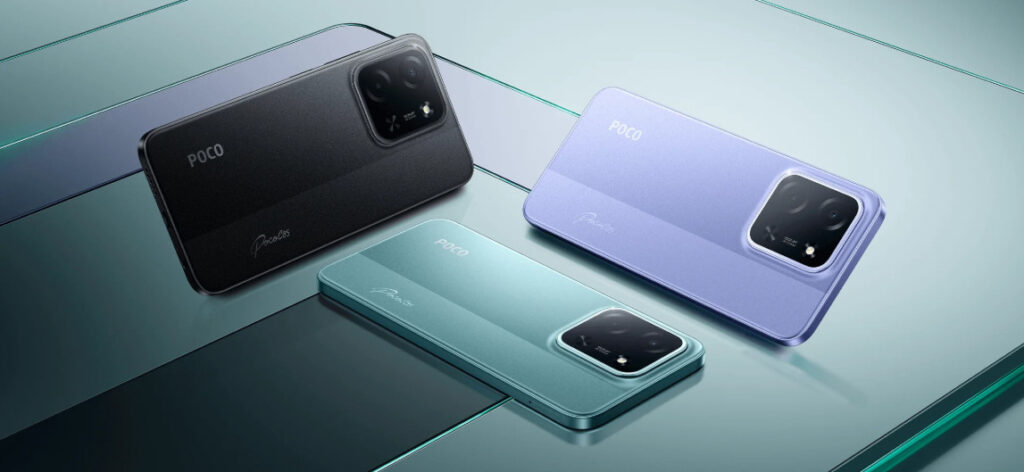
Approximate price: KSh 12,000-15,000
Best for: screen size and standby endurance
Key specs: 6.9-inch display, 4-8GB RAM, 128GB storage, MediaTek Helio G81-Ultra, 6,000mAh battery, 33W charging, IP64
POCO went big and simple with this one. A 6.9-inch screen, a 6,000mAh battery, and a surprisingly capable chip for the price. It’s not chasing camera awards or premium materials, but for pure screen time and endurance per shilling, it’s one of the strongest options below KSh 15,000.
Pros: massive battery, large display, IP64 splash resistance
Cons: camera is purely functional, plastic build feels basic
Best for: heavy screen-time users who prioritise battery over polish
Verdict: the endurance champion at the lower end of this list.
Best Phones Under KSh 20,000 by Use Case
| Use Case | Recommended Phone | Why |
| Best overall | Infinix Hot 60i | Balanced specs and lowest cost per feature |
| Best Samsung | Galaxy A17 4G (or A07 on a tighter budget) | Software longevity and resale value |
| Best battery | Vivo Y21d or Redmi 15C | 6,000mAh+ capacity |
| Best camera | Redmi Note 14 4G | 108MP sensor, AMOLED preview screen |
| Best for students | Redmi 15C or Tecno Spark 40 | Big screen, low entry price |
| Best for small business | Infinix Hot 60i, Galaxy A07 | Fast charging, dependable daily use |
| Best durability | Vivo Y21d | IP68/IP69+ rating, MIL-STD-810H build |
| Best second-hand option | Used Galaxy A-series or Redmi Note | Better specs per shilling if bought carefully |
What to Check Before Buying a Phone Under KSh 20,000 in Kenya
How Much RAM Do You Need for a Phone Under KSh 20,000?
4GB RAM handles everyday use like WhatsApp, M-Pesa, and browsing without issue, but 6GB or 8GB gives noticeably smoother multitasking and a longer comfortable lifespan before the phone starts feeling slow. Watch out for “extended RAM” marketing, which borrows from storage and isn’t the same as physical RAM.
Storage: 128GB is now the practical minimum if you take photos or run business apps. 64GB variants (common on the cheapest Galaxy A07 configurations) fill up within months.
Battery: 5,000mAh is the current baseline. If you’re a boda rider, field agent, or someone who can’t charge on a fixed schedule, look at the 6,000mAh-plus options like the Vivo Y21d, Redmi 15C, or POCO C85.
Camera: a 50MP or 108MP label doesn’t automatically mean better photos. Sensor size, processing, and lighting conditions matter more than the megapixel count printed on the box. Every phone on this list handles daylight shots well; the real differences show up indoors and at night.
Processor: fine for WhatsApp, TikTok, M-Pesa, and light gaming across the board. None of these phones are built for PUBG Mobile or Genshin Impact at high settings, so don’t buy on gaming promises alone.
Should You Buy a New Phone or a Used One Under KSh 20,000?
A new phone under 20K gives you warranty, a fresh battery, and none of the risk that comes with a used device. A used phone can get you noticeably better specs for the same money, an older Galaxy A-series or Redmi Note, for instance, but the risk profile changes completely.
New phone pros: warranty, fresh battery, easier returns, no history to worry about
Used phone pros: better specs per shilling, sometimes an older flagship-adjacent model
Used phone cons: battery wear, blacklisted-IMEI risk, hidden repairs, no warranty
Safety Checklist for Buying a Used Phone in Kenya
Before you pay for any second-hand phone, run this quick check:
- Dial *#06# to display the IMEI, then send it as an SMS to 1555. The Communications Authority of Kenya will reply confirming the phone’s genuine make and model within minutes, and the service is free.
- Test the SIM slots, Wi-Fi, Bluetooth, camera, speaker, microphone, and fingerprint or face unlock in person, before you pay.
- Check the screen for dead pixels or discolouration under different lighting.
- Confirm the actual RAM and storage in Settings rather than trusting the seller’s description.
- Do a factory reset once the phone is in your hands.
- Never send a deposit before seeing the phone. Meet in a public place, ideally somewhere with people around.
- Ask for a receipt or some proof the seller actually owns the device.
Buying second-hand? Browse phone listings on SokoMix, message sellers directly, and always meet safely before paying anything.
Where to Buy Phones Under KSh 20,000 in Kenya
Official brand shops and authorised dealers remain the safest route for a new phone with a working warranty. Online retailers like Jumia give you price comparisons across variants in one place. Classifieds platforms such as SokoMix work well if you’re comparing new and used options side by side, or if you’d rather buy directly from someone nearby instead of paying delivery fees.
Whichever route you choose, treat unusually cheap deals with suspicion, especially sellers who pressure you to pay a deposit before you’ve seen the phone in person.
Final Verdict: Which Phone Under KSh 20,000 Should You Buy?
If you want the single safest pick, the Infinix Hot 60i covers battery, charging speed, and storage better than anything else near KSh 15,000-18,000. If display quality and long-term software support matter more to you than saving a few thousand shillings, the Samsung Galaxy A17 4G or Redmi Note 14 4G are worth stretching for, even if they sit right at or slightly past the 20K line depending on the retailer.
Whatever you choose, prioritise a phone with at least 4GB RAM, 128GB storage, a 5,000mAh battery, and a seller or shop you actually trust. That combination will serve you well past the first year, which is really the whole point of buying smart in this bracket.
If you’re upgrading and still have a working phone to offload, listing it takes a few minutes on SokoMix and puts it in front of buyers looking in this exact price range.
FAQs
Which is the best phone under KSh 20,000 in Kenya?
It depends on your priority, but the Infinix Hot 60i currently offers the strongest overall value, while the Samsung Galaxy A17 4G wins on long-term software support and display quality.
Which Samsung phone is under KSh 20,000 in Kenya?
The Galaxy A07, Galaxy A16, and Galaxy A17 4G all fall under or right at KSh 20,000, ranging from roughly KSh 11,000 to KSh 20,500 depending on storage variant and retailer.
Which phone under 20K has the best battery in Kenya?
The Vivo Y21d (6,500mAh) and Redmi 15C (6,000mAh) lead this bracket, with the POCO C85’s 6,000mAh battery close behind.
Is 4GB RAM enough for a phone under KSh 20,000?
Yes, for everyday tasks like WhatsApp, M-Pesa, and browsing. If you multitask heavily between several apps, 6GB or 8GB will feel noticeably smoother and age better.
Should I buy a used phone under KSh 20,000?
Only after checking the IMEI through the Communications Authority’s free 1555 service, testing every function in person, and meeting the seller somewhere safe. A used phone can offer better specs, but the risk of hidden faults is real.
Where can I find affordable phones in Kenya?
Official brand shops, authorised dealers, online retailers like Jumia, and classifieds platforms like SokoMix all list phones in this range, each with different trade-offs on warranty and price.
What should I check before buying a second-hand phone in Kenya?
IMEI status, battery health, screen condition, camera and speaker function, actual RAM and storage, and proof the seller owns the device.
Prices checked: July 2026. Phone prices in Kenya move quickly, so confirm current pricing with the retailer before buying.