

Freelancing in Kenya has become a genuine income path for thousands of people, not just a side experiment for techies. Writers, designers, virtual assistants, developers, and marketers are earning consistently from international clients, getting paid in dollars, and doing it from Nairobi, Kisumu, Eldoret, or wherever they have a stable internet connection.
The money is real. But most guides you’ll find online skip the honest part: landing a first client takes weeks, not days. Building consistent income takes months, not weeks. The Kenyan freelancers earning well today spent serious time building the skills, profiles, and proof of work that make clients trust them.
This guide covers all of it — choosing a skill, building a portfolio when you have no clients yet, picking the right platforms, getting paid in dollars, staying safe from scams, and what KRA expects from you.
Quick Answer: To start freelancing in Kenya, choose one skill you can sell confidently, create 3-5 portfolio samples as proof, set up profiles on platforms like Upwork or Fiverr, and configure a payment method (PayPal linked to the M-Pesa app, Payoneer, or a local bank for SWIFT transfers). Pitch consistently, deliver on time, and collect reviews. Your first client will likely take a few weeks. Keep records of every payment for KRA.
Already have a skill to offer? Post a free listing on SokoMix classifieds and let local clients find you today.
What Is Freelancing?
Freelancing means selling your skills to clients without being permanently employed by anyone. You are self-employed. You choose who you work with, set your own rates, and work from wherever you have internet access.
A content writer producing blog posts for three different brands, a designer making logos on Fiverr, a virtual assistant managing a UK founder’s inbox, and a developer building WordPress sites for Kenyan SMEs are all freelancers. The work can be local or international. Payments can land in KES or USD. Income scales with the quality of your skill and how seriously you run the business side.
Common freelance services include writing and copywriting, graphic design, virtual assistance, web development, SEO, social media management, video editing, digital marketing, data entry, transcription, and online tutoring.
Is Freelancing in Kenya Worth It?
Freelancing in Kenya is worth it if you have a skill people will pay for and you are realistic about how long building traction takes. Dollar-denominated rates look attractive because even modest international rates translate well in KES. A $20 blog post at current exchange rates is over KSh 2,500. A $400 web project is around KSh 51,000. When you stack that against the local market, the appeal is obvious.
The honest side: global platforms are crowded. Upwork has millions of registered freelancers. Fiverr has more. Beginners typically spend weeks, sometimes months, sending proposals before landing a first client. Success depends on your skill level, how well you can demonstrate it, how specific your niche is, and whether you price your work for the value you deliver rather than just to undercut everyone else.
If you go in expecting quick cash, you’ll almost certainly quit before it gets good. Treat it as building a skill-based business from day one, and the growth compounds. Some Kenyan freelancers today run agencies with multiple clients. Many more earn consistent side income that meaningfully covers bills. The gap between them and the people who gave up is usually what happened in the first 90 days.
Best Freelance Skills to Start With in Kenya
Beginner-Friendly Skills
These need less time to learn before you can start earning:
- Content writing (blog posts, product descriptions, newsletters)
- Virtual assistance (inbox management, scheduling, data entry, customer support)
- Social media management (content planning, posting, engagement)
- Canva graphic design (social media graphics, flyers, WhatsApp catalogues)
- Short-form video editing (TikTok, Reels, YouTube Shorts)
- Data entry and transcription
- Basic WordPress support (setup, content uploads, minor customizations)
Higher-Paying Skills (Steeper Learning Curve)
These take longer to learn but the income ceiling is higher:
- SEO (on-page optimization, keyword research, link building)
- Email marketing (Mailchimp, Klaviyo, Brevo campaigns)
- Google Ads and Meta Ads management
- UI/UX design
- Web development (HTML/CSS, JavaScript, React, full custom WordPress)
- Data analysis (Excel, Python, Power BI, Tableau)
- Technical writing (developer documentation, API guides, SaaS content)
- AI automation and chatbot setup
| Skill | Entry Difficulty | Income Potential | Best Starting Platform |
| Virtual assistance | Easy | Medium | Upwork, LinkedIn |
| Content writing | Easy–Medium | Medium | Upwork, Fiverr, direct clients |
| Canva design | Easy–Medium | Medium | Fiverr, Instagram outreach |
| Social media management | Easy–Medium | Medium | LinkedIn, direct clients |
| SEO | Medium | High | Upwork, direct clients |
| Web design | Medium | High | Upwork, LinkedIn |
| Software development | Hard | High | Toptal, Upwork, LinkedIn |
What You Need Before You Start Freelancing
The entry requirements are lower than most people think.
You need a phone or laptop, reliable internet (Safaricom home fibre, Airtel fibre, or even a strong mobile data bundle covers most tasks), a professional email address, a skill you can describe and demonstrate, 3-5 portfolio samples, and a payment method set up before you land your first client. That is the full list.
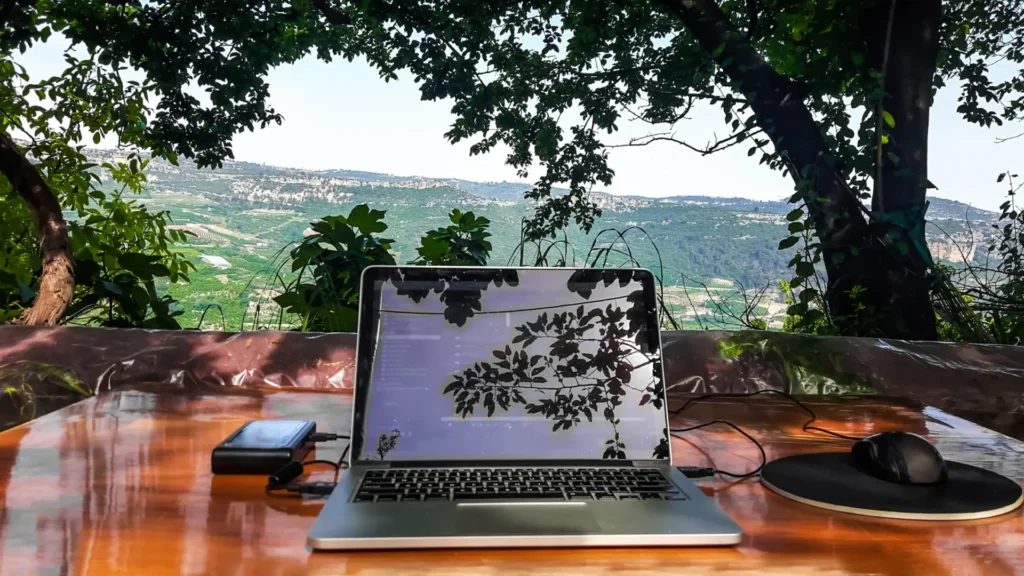
A phone handles light freelance work well. Content writing, Canva design, social media management, and basic virtual assistance all run fine on a smartphone. But a laptop opens up web development, video editing, and professional tools that simply don’t work properly on a small screen. If you’re starting without one, campus computer labs, iHub, Nairobi Garage, Ikigai, and cyber cafés are real options people have used to kick things off. Once you start earning, the laptop pays for itself fast.
One thing to avoid: borrowing heavily to buy equipment before you’ve validated a skill and landed a first paying client.
How Do You Choose a Freelance Niche?
Your niche is the specific combination of what you do and who you do it for. “I’m a writer” is not a niche. “I write SEO blog posts for fintech and software companies” is. The narrower you go, the easier it is for the right client to recognize that you understand their world, and the harder it is for them to lump you in with every other generalist.
A formula that works: I help [type of client] with [specific service] so they can [outcome].
Examples that actually land:
- “I help Kenyan e-commerce brands write product listings and email campaigns that convert.”
- “I manage Instagram and TikTok accounts for restaurants and cafés in Nairobi.”
- “I help busy founders handle email management, calendar scheduling, and customer follow-ups.”
- “I build WordPress websites for local schools, churches, and SMEs in Kenya.”
Pick the intersection of what you can do well, what people pay for consistently, and what you can prove through samples. Beginners who pitch themselves as “I can do anything” tend to get hired for nothing, because there’s nothing distinctive to hire them for.
How Do You Build a Portfolio Without Clients?
You don’t need paid work to have a portfolio. Create 3-5 sample projects that show the type of work you want to be hired for, and present them as cleanly as you would paid deliverables. Clients evaluate quality, not whether a sample came from a paying engagement.
Practical ways to build samples with no client history:
- Writer: Write 3 complete blog posts in your target niche and publish them on Medium, a free WordPress site, or LinkedIn Articles.
- Designer: Pick 3 real but visually underserved Kenyan brands, redesign their social media graphics, and document the before-and-after.
- VA: Build a sample email workflow, a monthly social media calendar, and a client onboarding checklist in Notion or Google Docs.
- Developer: Build two demo websites on a free subdomain (GitHub Pages or InfinityFree) and document the tech stack and design choices.
- Video editor: Edit 2-3 clips using royalty-free footage, upload them to YouTube or Vimeo, and present them as examples.
Free tools to host your portfolio: Google Drive (shared folder), Notion (public page), Canva website builder, Behance (designers), GitHub (developers), your LinkedIn profile.
Already offering services locally? List them on SokoMix and point your WhatsApp and LinkedIn to that page.
Best Freelance Websites for Kenyans
| Platform | Best For | Beginner Friendly | Fee Notes |
| Upwork | Writing, VA, development, marketing, design | Medium | Variable 0–15% per contract (from May 2025) |
| Fiverr | Packaged gigs: design, writing, editing, voiceover | Yes | Flat 20% on all earnings |
| Freelancer.com | Project bidding | Medium | Watch for very low-budget posts |
| PeoplePerHour | Writing, design, business services | Medium | Popular in the UK and EU |
| Direct clients, remote jobs, networking | Yes | No platform fee | |
| Contra | Portfolio-based freelancing | Medium | Zero platform fee for freelancers |
| Toptal | Premium developers, designers, finance experts | No | Application-based; not for beginners |
| SokoMix | Kenyan clients finding local service providers | Yes | Post your free listing here |
A note on Upwork’s fees: since May 2025, Upwork replaced its old tiered structure (which used to charge 20% on the first $500 you earned from each client) with a variable model where the fee per new contract is set between 0% and 15%. Most freelancers currently see 10–13% in practice. On top of that, you need to budget for “Connects,” the tokens required to bid on jobs, at $0.15 each. It adds up faster than it looks.
Fiverr keeps things simpler: a flat 20% off every order, no tiers or exceptions. Fiverr’s payout methods page explains withdrawal options including PayPal, Payoneer, and bank transfer.
The bigger strategic point: platforms are a starting point, not the destination. Long-term, direct clients sourced through LinkedIn, referrals, or your own website pay more and come with far less competition.
How to Create a Freelance Profile That Gets Clients
Your freelance profile works as a CV and a sales pitch at the same time. The goal is simple: the right client should land on it and immediately understand who you help, what you do, and why you’re worth paying.
Keep your title specific. Not “Writer” or “Freelancer” but “SEO Blog Writer for Finance and Tech Brands” or “Canva Social Media Designer for Small Businesses.” Write your bio in first person, lead with the client’s problem, and tell them clearly what they get when they hire you. Include your 3-5 strongest samples. Set a rate you can defend. And respond to client messages within a few hours — on Upwork especially, slow replies kill proposals before they get anywhere.
A sample bio for a Canva designer: “I design clean, on-brand social media graphics for small businesses using Canva. I handle Instagram posts, product promotions, event flyers, and WhatsApp marketing visuals. Most orders delivered within 24 hours, with revisions until it’s right.”
Short. Client-first. Specific.
How to Get Your First Freelance Client

Most beginners wait too long here, assuming clients will come looking for them. On Upwork and Fiverr, that is not how it starts. You have to go looking.
Apply on Freelance Platforms
Write proposals that name the client’s specific problem, attach one relevant sample, and ask one concrete question about the project. Read the job post properly before you write a word. Avoid generic openers like “Dear sir/madam, I saw your posting and I am interested.” Send 5-10 targeted, personalized applications per day rather than 50 scattered ones.
Use LinkedIn
Update your profile with a clear freelance headline. Post useful content once or twice a week around your skill area. Connect with business owners, marketers, and decision-makers in your niche. Direct outreach works better than most people expect. Something like “I noticed you publish consistently about [topic] — I write in that space and would be happy to share a few samples if it’s ever useful” gets read because it’s specific and doesn’t ask for anything upfront.
Pitch Local Kenyan Businesses
This channel is consistently underused. A Westlands boutique posting daily on Instagram needs better product captions. A tour company needs SEO blog posts to attract international visitors. A Nairobi restaurant needs a proper WhatsApp catalogue and a clean menu design. Walk in with a sample of what you’d do for them specifically, and you’ve already separated yourself from everyone who sent a generic email.
For more ways to earn online in Kenya beyond freelancing, the top online jobs in Kenya guide covers remote employment, content creation, and other digital options alongside platform freelancing.
How Do You Write a Winning Proposal?
A good proposal is short, names the client’s actual problem, shows one example of relevant work, and ends with a question that proves you actually read the brief. Proposals starting with “I have 5 years of experience and I am confident I can complete this project” get skipped in the first two seconds.
A structure that consistently works:
- Open by naming the client’s specific situation or goal.
- Explain briefly how you would approach it.
- Drop in one relevant sample or a short result.
- Ask one specific question about the project.
- Close cleanly — no begging, no over-promising.
Sample: “Hi [Name], I saw that you need SEO blog content for your logistics business. I’ve written B2B content for supply chain and operations brands for two years, and I know how to hit target keywords without losing the reader. Attached is a sample from a similar project. Before I put together a full proposal, are you targeting Kenyan businesses specifically, or East Africa more broadly?”
That’s it. No list of every skill you have. No lengthy work history. Just relevance, one piece of proof, and a question that shows you care what this project is actually about.
How Much Do Kenyan Freelancers Charge?
Freelancing rates in Kenya vary widely based on skill level, niche, portfolio strength, and whether you’re working with local or international clients. There is no fixed market rate, and anyone quoting you a guaranteed income figure is guessing or selling something.
Rough ranges for beginners and experienced freelancers:
| Service | Beginner Range | Experienced Range |
| 500-word blog post | $10–$30 | $50–$150+ |
| Logo design | $15–$50 | $100–$500+ |
| Social media graphics | $5–$20 per post | $30–$100+ per post |
| Virtual assistance | $3–$8/hour | $10–$30+/hour |
| WordPress landing page | $50–$150 | $300–$1,000+ |
| Short-form video edit | $10–$30 | $50–$200+ |
These are ranges, not guarantees. A beginner Canva designer charging $5 per graphic and a senior brand designer charging $500 per concept are both on Fiverr. The difference is portfolio quality, niche clarity, and client reviews. Don’t undercut yourself into rates that don’t cover your time just to land a first review. Price fairly from the start and raise your rates as you build proof.
How Do Kenyan Freelancers Get Paid in Dollars?
The most reliable payment routes for Kenyan freelancers in 2026 are Payoneer (for marketplace withdrawals and agency payments), PayPal connected to the M-Pesa app (for smaller and medium payments), and direct bank transfer (for formal contracts). Each has different fees, speeds, and best uses.
PayPal to M-Pesa
PayPal Kenya is widely accepted by international clients and most freelance platforms. Important update for 2026: the old Thunes-powered portal (paypal-mobilemoney.com) was permanently shut down on August 16, 2025. Withdrawals now go through the M-Pesa app directly. Open the M-Pesa app, go to Global Payments, tap PayPal, link your account through the in-app redirect, and withdraw from there. Most amounts under KSh 50,000 clear within 2–15 minutes. There is a 3% withdrawal fee, and PayPal’s exchange rate margin adds another 3–4% on top. The daily limit is KSh 300,000.
As of mid-2026, only personal PayPal accounts are available to Kenyan residents. Business-grade features like multi-currency holds are not offered. Factor all the fees in when you are pricing your work.
Payoneer
Payoneer works well for Kenyan freelancers, especially those on Upwork, Fiverr, or working with agencies that pay through the Payoneer network. You receive USD, EUR, or GBP into a Payoneer account and withdraw directly to a Kenyan bank account, typically within one to two business days. Payoneer also issues a prepaid Mastercard, which is useful for paying for tools, subscriptions, or online advertising directly.
Wise
Wise offers strong mid-market exchange rates and works for certain international transfers into Kenya. As of 2026, Wise Kenya does not offer USD balance holding the same way European accounts do. Check what is actually available for your account type before committing to it as your main payment route.
Bank Transfer (SWIFT)
For contracts above $500, direct bank transfer is worth setting up. It is slower (usually 3–5 business days) and intermediary banks sometimes take a cut, but it leaves a clear paper trail and looks professional to serious clients. Ask your bank for your SWIFT/BIC code and full account details. Most Kenyan banks provide this at any branch or through their online banking portal.
| Payment Method | Best For | Pros | Cons |
| PayPal to M-Pesa (via app) | Small and medium payments | Fast, M-Pesa integrated | 3% fee + exchange margin |
| Payoneer | Upwork/Fiverr/agency withdrawals | Widely accepted, bank withdrawal available | Requires local bank account for cash-out |
| Bank transfer (SWIFT) | Larger formal contracts | Professional, traceable | Slower, possible intermediary fees |
| Wise | Selected international receipts | Good FX rates on supported routes | Limited USD hold for Kenyan accounts |
Do Freelancers in Kenya Pay Tax?
Yes. Freelance income is taxable income in Kenya, and KRA requires you to declare it. KRA’s position is clear: employed individuals who also earn income from freelancing, consultancy, or online services must declare that additional income. Every individual with a KRA PIN is required to file an annual income tax return whether or not they earned income that year. The filing window opens January 1 and closes June 30 for the previous year’s income.
Keep records of every payment received, every invoice you issue, and every business expense (internet bundles, software subscriptions, equipment purchases). These make filing straightforward and give you something solid to point to if KRA ever has questions. For a step-by-step walkthrough of the actual iTax filing process, the how to file KRA returns online in Kenya guide covers it in detail.
For anything complex like multiple income streams, substantial monthly earnings, or questions about deductible expenses — speak to a tax consultant rather than guessing.
How to Spot and Avoid Freelancing Scams in Kenya
Scams target beginners specifically. The patterns repeat endlessly in Facebook groups, WhatsApp broadcasts, and cold DMs, and they work because they sound just legitimate enough.
Red flags to know:
- Registration fees. Any opportunity requiring you to pay to register or access work is a scam. No legitimate freelance platform charges you to apply for jobs.
- Fake agencies on Facebook and WhatsApp. They promise $300–$500 per week for writing or data entry, ask you to pay a “processing fee” to get started, then vanish. I’ve seen this exact pattern repeat across multiple Kenyan Facebook groups for years.
- Free work disguised as a “trial.” A client who asks for a complete, detailed project for free is getting unpaid work out of you, not testing your skills.
- Rushing off-platform. On Upwork and Fiverr, clients who push to move to WhatsApp or email before a contract is in place are trying to bypass the platform’s payment protection. Hold your ground.
- Credential requests. No legitimate client needs your PayPal login, M-Pesa PIN, OTP, or bank details beyond what’s required for payment setup.
- Essay mills and academic work. Beyond the ethical issues, these get you permanently banned from freelance platforms and create serious legal exposure.
- Data protection. If your freelance work involves handling client customer data (contact lists, user records, emails), you are operating as a data processor under Kenya’s Data Protection Act. The ODPC provides practical guidance on obligations for individuals handling personal data professionally.
Use written agreements for any project above $50. On Upwork and Fiverr, keep working through the platform until you’ve built enough of a relationship with a client to trust a direct arrangement.
Common Mistakes That Cost Beginners Time and Money
- Choosing a skill because it sounds easy, not because they can deliver it at a quality someone would pay for.
- Sending copy-paste proposals that don’t reference the client’s actual brief.
- Pricing so low that consistent work still doesn’t cover basic costs.
- Applying for every job regardless of skill match or fit.
- Going quiet on a client mid-project.
- Missing deadlines and assuming a quick apology repairs the relationship.
- Not saving samples and results from completed work.
- Depending on a single platform for all income.
- Failing to track invoices, payments, and expenses from day one.
- Falling for schemes promising guaranteed weekly income for simple online tasks.
Your 30-Day Plan to Land the First Client
| Period | Action |
| Days 1–3 | Choose one skill and define a specific niche |
| Days 4–7 | Study the top 5 profiles in your niche on Upwork or Fiverr |
| Days 8–12 | Build 3 portfolio samples and host them somewhere shareable |
| Days 13–15 | Set up your Upwork, Fiverr, LinkedIn, and SokoMix profiles |
| Days 16–25 | Send 5–10 personalized proposals or pitches per day |
| Days 26–30 | Follow up, refine your profile, post proof of work, ask for your first review |
Thirty days done consistently is enough to land a first client. Not enough to replace a salary, but enough to prove the model works for you. Once you have a first review or testimonial, the next client comes faster. If you’re thinking longer term and want to formalize into a registered business, the how to start a small business in Kenya with KES 10,000 guide covers business registration and structuring from that point.
Before You Apply: Final Checklist
- I have chosen one specific service.
- I know exactly who I want to serve (my niche).
- I have at least 3 portfolio samples ready and shareable.
- I have a professional email address.
- I have set up at least one freelance profile (Upwork, Fiverr, LinkedIn, or SokoMix).
- I have a payment method configured (PayPal via M-Pesa app, Payoneer, or bank transfer).
- I have a basic system to track income and expenses.
- I know what freelancing scams look like and how to spot them.
- I have a proposal template ready.
- I have my service listed or promoted somewhere online.
Frequently Asked Questions
Can I start freelancing in Kenya with no money?
Yes. Creating profiles on Upwork, Fiverr, LinkedIn, and SokoMix is free. Building a portfolio using Google Docs, Canva, or Notion costs nothing. You can start with a phone and mobile data.
Which freelance skill is best for beginners in Kenya?
Content writing and virtual assistance have the lowest barriers and consistent demand. But “best” depends on what you can actually do well. A weak writer struggles regardless of how high the demand is. Start with the skill closest to something you can prove right now.
Can I get paid in dollars while living in Kenya?
Yes. PayPal (connected to the M-Pesa app via Global Payments), Payoneer (withdrawing to a Kenyan bank account), and direct SWIFT bank transfers all let Kenyan freelancers receive USD from international clients.
Which is better for Kenyans, Upwork or Fiverr?
Upwork is better for longer contracts, higher-value projects, and service-based work. Fiverr is better for packaged, repeatable gigs where you want clients to come to you. Both charge meaningful fees. Fiverr takes a flat 20%. Upwork’s variable fee currently averages 10–13% for most freelancers, plus Connects. Many Kenyan freelancers run both simultaneously.
Can I withdraw freelance earnings to M-Pesa?
Yes. PayPal withdrawals to M-Pesa now use the M-Pesa app directly (Global Payments > PayPal) after the old Thunes-powered portal was shut down in August 2025. Payoneer withdraws to a local bank account. Some Kenyan banks also accept direct SWIFT transfers from international clients.
Do freelancers in Kenya pay tax?
Yes. KRA requires all income including freelance and online earnings to be declared in your annual income tax return. The filing window runs January 1 to June 30 for the previous year’s income.
Can I freelance using only a phone?
Yes for writing, basic Canva design, social media management, and virtual assistance. Web development, serious video editing, and complex design work genuinely need a laptop.
How long does it take to get the first client?
Most beginners who pitch consistently land a first client within 2–6 weeks. Some take longer depending on the skill, niche, proposal quality, and platform competition. Inconsistent pitching is the most common reason it drags out.
Are online writing jobs in Kenya legit?
The major platforms (Upwork, Fiverr, LinkedIn) are legitimate. The scams come from Facebook groups, WhatsApp broadcasts, and unsolicited DMs. Any writing opportunity that asks you to pay first is a scam, full stop.
How do I avoid freelance scams?
Never pay to apply for work. Never share your PayPal login, M-Pesa PIN, or OTP with a client. Use escrow on Upwork and Fiverr. Don’t move off-platform before a contract is in place. Get a written agreement for any project above $50.
The first step is picking a skill and putting yourself out there. Post your service listing on SokoMix, write clearly what you offer and how to reach you, then share the link on your WhatsApp, Facebook, and LinkedIn. It takes five minutes and it puts you in front of Kenyan clients actively looking for what you do.
Disclaimer: Freelance income is not guaranteed and varies by skill, experience, niche, and effort. The rates and platform fees in this guide reflect publicly available information as of mid-2026 and may change. For tax obligations, consult a qualified tax professional or refer directly to KRA.