

Starting a kibanda or food stall business in Kenya is one of the most realistic ways to earn daily income without large capital, especially if you are near a busy estate, bus stage, market, school, construction site, or office zone. The startup cost varies by county, rent, menu, and setup, but a basic food stall can launch with modest capital if you choose the right spot, get your county permits in order, price your food correctly, and track your money from day one.
Quick answer: To start a kibanda business in Kenya, choose a high-foot-traffic location, decide on a focused menu of 5-8 items, estimate startup capital, get your county business permit and food hygiene approvals, buy basic cooking equipment, source reliable ingredients, maintain strict hygiene, price meals to cover all costs and profit, and record daily sales and expenses. County requirements and fees vary, so confirm everything with your specific county government before you start.
Is a kibanda business profitable in Kenya?
A well-run kibanda in a busy location can be consistently profitable because food is a daily purchase, not discretionary spending. Location, portion discipline, ingredient cost control, and consistent taste determine whether you make real money or just stay busy.
A lunch stall near a busy construction site or matatu stage that serves 60-100 plates per day at KSh 100-150 per plate can gross KSh 6,000-15,000 daily. After ingredient costs, rent, gas, and waste, a disciplined operation might net KSh 1,500-4,000 on a good day. Not every day is a good day, so your baseline estimate should be built on your lowest expected sales, not your highest.
High sales and real profit are two different things. A lot of kibanda owners gross KSh 8,000 a day and net almost nothing because they haven’t separated ingredient costs from personal spending, or because food waste is eating the margin silently.
Best types of food stall businesses in Kenya
| Type | Best location | Why it works |
| Breakfast stall (tea, mandazi, chapati, eggs) | Bus stages, estates, schools, offices | Fast-moving, high repeat visits, low waste |
| Lunch kibanda (ugali, rice, beans, stew) | Construction sites, offices, markets | Workers need affordable daily meals |
| Chapati and beans stall | Estates, campuses, stages | Low input cost, simple to prep in bulk |
| Githeri/ndengu/sukuma stall | Low-income estates, student areas | Bulk cooking, predictable cost |
| Smokie/egg/samosa cart | Stages, campuses, nightlife areas | Very low setup cost, fast daily cash flow |
| Pilau/biryani weekend stall | Estates, events, busy markets | Premium pricing acceptable on weekends |
| Home-based delivery | Office zones, estates via WhatsApp | Lower rent burden, scalable if marketed well |
The temptation is to start with a large menu to attract more customers. It usually does the opposite. A 5-8 item menu is easier to stock, has less waste, and lets you master taste and portion sizing before you think about adding dishes.
How to start a kibanda business in Kenya: a step-by-step guide
Step 1: Choose your food concept
Decide what you are selling and to whom before anything else. A breakfast stall targeting office workers in Kilimani has a different setup, pricing, and schedule than a githeri kibanda near Muthurwa market or a chapati stall outside a secondary school in Meru.
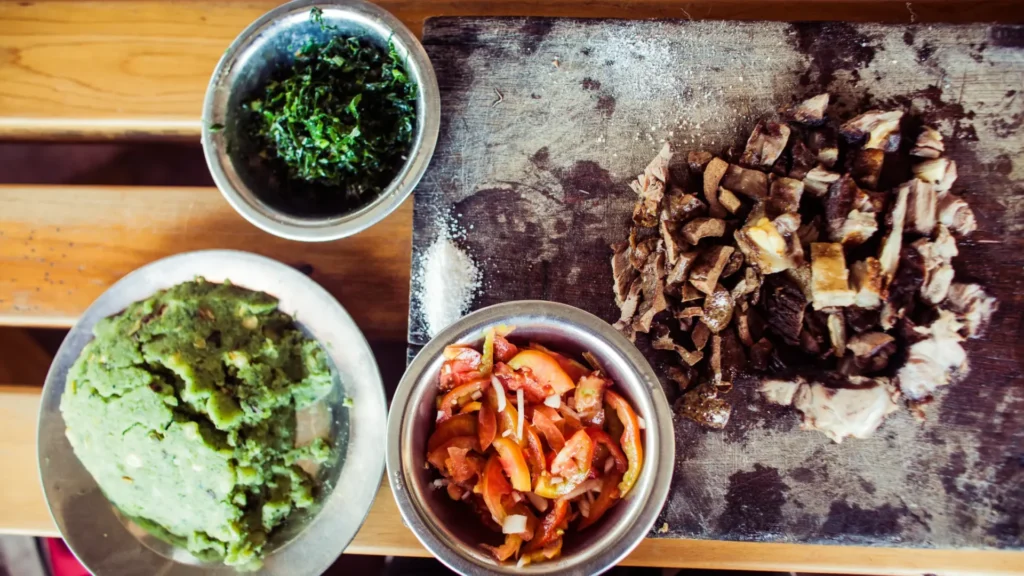
Start with 5-8 core items that share ingredients. If your chapati dough also covers mandazi and samosa pastry, you get three products from one prep session. That cuts your daily buying list and reduces waste.
Quick examples by concept:
- Breakfast: Tea, mandazi, chapati, eggs (boiled or scrambled)
- Full lunch: Ugali, sukuma, beef stew, cabbage, omena or matumbo
- Budget lunch: Rice, beans, ndengu, kachumbari
- Street snacks: Smokies, eggs, samosas, viazi karai
- Weekend special: Pilau, matumbo, or biryani
Step 2: Study the location before you pay a deposit
Foot traffic is the most important variable in the food business. Cheap rent in a quiet spot costs more than it earns.
Before committing to any location, visit at 7am, 12pm, and 5pm on a weekday and a Saturday. Count the people, note who actually stops to buy food, and observe whether existing kibandas nearby are doing real business or just surviving.
| Location type | Best menu match | What to verify |
| Near construction sites | Ugali, beans, githeri, tea | Consistent working days? Season-dependent site? |
| Near offices | Lunch plates, packed meals, tea | Do workers buy outside or bring food? |
| Near schools/campuses | Chapati, beans, smokies, tea | Impact of school holidays on your sales |
| Matatu stages | Tea, mandazi, eggs, smokies | Peak hours only or consistent through the day? |
| Residential estates | Supper, breakfast, delivery | Evening demand? Weekend specials needed? |
Also check: is there piped water nearby, is waste disposal realistic, and does the county allow food vending in that spot? Getting chased away after you’ve paid a month’s deposit is a costly way to learn this.
Step 3: Estimate startup capital honestly
The table below shows realistic ranges, not fixed costs. Add at least 20% contingency for unexpected expenses.
| Item | Estimated range | Notes |
| Rent, deposit, or stall fee | KSh 3,000-20,000+ | Varies heavily by town, area, and setup type |
| Cooking equipment (gas/jiko, sufurias, pans) | KSh 8,000-40,000+ | LPG setup costs more upfront but saves on fuel long term |
| Tables, chairs, benches | KSh 3,000-20,000+ | Start simple and upgrade once revenue is stable |
| Plates, cups, utensils, containers | KSh 3,000-15,000+ | Include hot pots for keeping food at temperature |
| First food stock | KSh 5,000-25,000+ | Size this to your first week’s expected menu, not your dream menu |
| Water, storage, cleaning supplies | KSh 2,000-10,000+ | Buckets, soap, sanitizer, lidded waste bins |
| County permits and health approvals | Varies | Confirm actual fees with your county (see Step 4) |
| Signboard | KSh 1,000-10,000+ | Optional at launch; helps with recognition quickly |
| M-Pesa Till (Lipa na M-Pesa) | Low/free to register | Essential: many customers no longer carry cash |
| Emergency float | KSh 5,000-20,000+ | For slow days, ingredient price spikes, equipment failure |
A lean roadside breakfast stall can launch for KSh 30,000-60,000 all-in. A more organized lunch kibanda with seating and full compliance will need KSh 80,000-150,000. Nairobi and Mombasa sit at the higher end of these ranges; smaller towns in Nyeri, Eldoret, Meru, and Kisumu generally run cheaper.
If you are looking at financing options, a SACCO or microfinance institution is more accessible at this scale than a commercial bank. Our guide to the best microfinance institutions in Kenya and the best SACCOs for loans in Kenya covers what is available and what to watch out for.
Step 4: Get your permits before you open
Every county requires at least a business permit and food hygiene approval for a food business. In Nairobi, the county’s Unified Business Permit (UBP) consolidates five previously separate approvals: the trading license, fire safety certificate, food and health certificate, advertising signage permit, and pest control certificate. For a small food business with up to five employees in Nairobi, the UBP costs around KSh 10,000 annually, though the exact fee depends on your business category and location within the county. Applications go through the Nairobi eServices Portal.
Outside Nairobi, you deal with your county’s own public health and licensing departments. The eProcedures portal by InvestKenya lists county procedures and is a useful starting point, but always confirm current fees directly with your county before paying.
Food handlers are required to hold a valid medical examination certificate from a public health officer. This covers anyone who prepares or serves food, including you. The Ministry of Health’s food hygiene licensing checklist sets out the full requirements for food premises: safe location away from contamination sources, proper waste disposal, cleanable food-contact surfaces, handwashing facilities, pest control, and storage standards. County inspectors check against this list.
County permit checklist:
- Unified Business Permit (Nairobi) or Single Business Permit (other counties)
- Food hygiene / public health approval
- Food handler medical certificates for all food-handling staff
- Fire safety certificate
- Signage permit if you use a large outdoor sign
On tax: once gross turnover exceeds KSh 1 million per year, KRA requires Turnover Tax (TOT) registration and filing. The rate has been amended more than once in recent years, including under the Finance Act 2023, so verify the current rate and filing schedule directly at kra.go.ke before filing. VAT registration becomes mandatory once turnover reaches KSh 5 million annually. If you need help with the iTax filing process, our guide on how to file KRA returns online in Kenya covers the full process.
Step 5: Buy the right equipment
This is where new kibanda owners tend to overspend before they have customers. Buy what you need to serve your first menu safely and add equipment as revenue grows.
Cooking and serving:
- Gas cooker or jiko (LPG cylinder and regulator if using gas)
- Sufurias in 2-4 sizes, frying pan, mwiko, ladle
- Food warmers or hot pots to keep food at safe serving temperature
- Chopping boards and sharp knives
- Serving spoons (a separate spoon per dish prevents cross-contamination)
Hygiene:
- Handwashing station with soap and clean water
- Lidded waste bins, separate for food waste and general rubbish
- Cleaning supplies: detergent, food-safe sanitizer, mop, buckets
- Aprons, hair covers, gloves
Service and operations:
- Plates, cups, cutlery (enough for peak hour with spare)
- Takeaway packaging if you do pack sales
- Display counter or table
- Benches and chairs for eat-in customers
- Signboard (painted or printed, your name and what you sell)
- M-Pesa Till number registered on your business phone
Second-hand equipment cuts the budget significantly. Gas cookers, sufurias, chairs, hot pots, and even small fridges regularly show up on SokoMix classifieds from business owners who are upgrading or closing.
Step 6: Find reliable food suppliers
Your suppliers determine two things: your cost of goods and the consistency of your food. Both matter for profitability.
Identify a regular cereals shop for rice, beans, ndengu, and maize. Find a vegetable supplier at your nearest market who can give consistent bulk pricing. Use a reliable butcher for meat and a wholesale shop for cooking oil, flour, tea leaves, and sugar. Pin down your gas supplier and know the nearest backup.
Buy in bulk for items with shelf life. A 25kg bag of rice is almost always cheaper per kilo than buying daily. For perishables like vegetables, meat, milk, and eggs, buy for one to two days only until you know your actual daily usage. Buying three days of beef and throwing away half is a quick way to cancel an entire day’s profit.
Step 7: Price your menu correctly
Underpricing is one of the fastest ways to kill a new kibanda. When ingredient costs rise (unga, cooking oil, and LPG fluctuate in Kenya), sellers who priced to the bone have no room to absorb the increase without losing customers or losing money.
The correct method:
- Calculate total ingredient cost per portion (specific, not approximate)
- Add daily fuel/gas cost divided by your expected number of dishes
- Add packaging cost per serving if doing takeaway
- Add your daily rent contribution (monthly rent divided by 26 working days)
- Add any labor cost
- Add a profit margin of at least 30-40%
- Check against nearby competitors and adjust only if you are significantly above
| Meal | Main cost variables |
| Chapati + beans | Flour, oil, beans, onions, tomatoes, gas, portion size |
| Rice + beef stew | Rice, beef, vegetables, onions, tomatoes, gas |
| Ugali + sukuma | Maize flour, sukuma, onions, cooking oil, gas |
| Tea + mandazi | Milk, tea leaves, sugar, flour, oil, gas |
Do not give away portions to attract customers. A plate that’s noticeably bigger than the competition’s costs you money you haven’t charged for, and customers get used to it. Generosity with portions at the wrong margin level is a slow financial bleed.
Step 8: Put hygiene at the center of everything

Food hygiene is not just compliance. It is your most important marketing. A clean kibanda with consistent food that has never caused anyone a stomach issue builds word-of-mouth faster than any signboard.
The Ministry of Health’s licensing checklist covers: safe location away from contamination sources, clean food-contact surfaces that can withstand regular sanitizing, handwashing facilities with soap and water, proper waste disposal, covered food storage, pest control, and valid medical certificates for food handlers.
In daily practice, that means:
- Wash hands before food prep and after handling waste
- Separate raw meat from cooked food at all times (different boards, different surfaces)
- Keep all prepared food covered when not being served
- Dispose of leftover perishables rather than storing and reheating the next day
- Wear a clean apron and hair cover every service
- Clean and sanitize all surfaces before and after each service period
- Empty and clean waste bins daily
One incident, a stomach upset that spreads through a WhatsApp estate group or among office workers on a lunch break, can wipe out weeks of customer trust. I’ve seen this happen to kibandas that had very good food. The food was not the problem; leftover meat stored overnight was.
Step 9: Market your kibanda practically
The most effective marketing for a kibanda is showing up every day with consistent taste and a clean setup. Regulars build habits, and habits are what generate steady daily sales.
Beyond that:
- Post your daily menu on WhatsApp Status and in local residential or office groups
- Offer nearby offices a lunch delivery arrangement with M-Pesa payment (Lipa na M-Pesa Till makes this frictionless)
- Set up a free Google Business Profile if your location is fixed; this helps customers find you on Maps
- TikTok and Instagram Reels of your cooking process work especially well for pilau, viazi karai, and chapati prep
- Build a WhatsApp contact list of regular customers and message them on weekday mornings
Consistency beats promotion every time. If your ugali tastes different on Wednesday than it does on Friday, no amount of marketing holds a customer base together.
Step 10: Track daily sales and expenses
This is where many food stalls break down. A simple notebook or phone note is all you need to start.
| Date | Total sales | Stock bought | Fuel | Rent share | Waste/loss | Net |
| Example | KSh 7,500 | KSh 3,200 | KSh 400 | KSh 385 | KSh 300 | KSh 3,215 |
Record every stock purchase and every day’s total sales. When ingredient prices rise, you will see the margin impact immediately and can adjust prices before you are already losing money. Keep your business M-Pesa till completely separate from personal spending. This one discipline separates kibandas that grow from ones that stay permanently “almost profitable.”
Sample startup budget: three kibanda scenarios
| Setup | What it covers | Estimated range |
| Lean starter | Tea, mandazi, chapati, eggs, smokies at a roadside spot | KSh 25,000-60,000 |
| Basic lunch kibanda | Rice, beans, ugali, stew with basic seating | KSh 60,000-120,000 |
| Organized food stall | Full lunch menu, seating, takeaway, compliance-ready | KSh 120,000-200,000+ |
These are estimates. Costs in Nairobi CBD, Westlands, or along Kiambu road are at the high end. Smaller towns in Nyeri, Embu, Eldoret, Kisumu, or Meru run cheaper on most line items. Get actual quotes for rent, gas cylinders, and equipment in your specific area before you finalize a budget.
What foods sell fast in a kibanda?
Across most urban Kenyan areas, breakfast staples, affordable lunch plates, and street snacks drive the highest daily volume. The exact bestsellers vary by location, but a few categories are consistent.
Breakfast (fast-moving): Tea, mandazi, chapati, eggs (scrambled or boiled), smokies, samosas, mahamri, arrowroots, sweet potatoes
Lunch (filling and affordable): Ugali with sukuma and beef stew, rice and beans, githeri with avocado, ndengu with chapati, matumbo, omena
High-margin add-ons: Avocado (KSh 20-30 each), kachumbari, extra chapati, extra soup or stew, bottled water, fresh juice
Add-ons increase revenue per customer with almost no additional cooking labor. Track what customers ask for that you do not have. That shortlist usually tells you what your next menu addition should be.
What causes kibanda businesses to fail?
Most food stalls fail for management reasons, not because the food was bad. The patterns are consistent enough to plan against.
Poor location is the most common cause. Cheap rent in a quiet area still costs more than it earns. If foot traffic is too low, nothing else fixes the math.
Mixing business and personal money is close behind. Drawing from the till for personal expenses without recording it means you can feel busy and profitable while actually spending next week’s stock money.
Over-buying perishables is a direct daily loss. Buying three days’ worth of spinach and discarding half erases real margin. Scale your stock to actual daily usage, not hoped-for usage.
Inconsistent taste breaks the repeat-customer habit. Regular customers build a routine around your food. One bad batch of stew or one salty chapati and they try the next stall, which is usually ten meters away.
Skipping county compliance creates enforcement risk. Public health officers do conduct inspections and raids. An illegal operation can be shut down mid-service. The permit costs are modest compared to losing your equipment to county enforcement or paying fines.
Mistakes to avoid when starting a food stall in Kenya
- Starting without confirming what permits your county actually requires and what they cost
- Choosing a location primarily because rent is cheap rather than because customers are there
- Launching with 15-20 menu items instead of 5-8 well-executed ones
- Skipping the food handler medical certificate for yourself and any staff
- Selling on credit without any system for recovering arrears
- Underpricing food to beat nearby competition, then running at a loss when ingredient costs rise
- Over-buying perishable stock before you know your actual daily usage
- Not setting up an M-Pesa Till (you lose cashless customers, who are a growing segment)
- Ignoring direct customer feedback on taste, portions, and service speed
- Assuming the business is healthy because “there are always customers” without checking actual daily net profit
How to grow from a small kibanda to a bigger food business
Growth from a single stall to a real food business is incremental. The trap is expanding before the first location can run without your daily presence.
Practical steps that compound well:
- Add office lunch delivery using boda riders once you have a consistent customer base nearby
- Introduce properly packaged takeaway meals (labelled packaging lifts perceived quality)
- Offer weekend pilau or biryani as a special at a higher price point
- Build a WhatsApp group of regular customers for daily menu notifications
- Register your business name via eCitizen (around KSh 950 for a sole proprietor) once you are consistently profitable
- Invest in better equipment gradually, especially a gas cooker if you are on jiko, as fuel cost control is critical at scale
- Open a second location only after the first runs consistently without you being physically present every day
That last point is the one most people underestimate. If your first kibanda still needs you there from 5am to 3pm every day to function, a second location doubles your hours, not your income.
How does a kibanda compare to other small businesses?
| Business | What it does well | Honest challenges |
| Kibanda/food stall | Daily cash flow, repeat customers, low entry barrier | Physical demand, early mornings, perishable stock, hygiene compliance |
| Mitumba business | Flexible inventory, scalable with good sourcing | Fashion sense required, sourcing quality varies, high competition in dense areas |
| Chicken farming | Scalable into supply chain | Needs dedicated space, feed and disease costs, slower returns |
| Online business or freelancing | Higher margins, remote work possible | Skill requirement, client acquisition takes time, income irregular early on |
| Starting a small business under KSh 10,000 | Lowest capital risk | Often digital or service-based, needs skills or network |
The kibanda wins on daily cash and low entry complexity. It loses on time: early mornings, consistent physical presence, and the reality that you cannot easily take a day off without sales dropping. If you want a business that eventually runs without you, build that system from the beginning by training help and documenting your recipes and processes.
Frequently asked questions
How much does it cost to start a kibanda business in Kenya?
A lean roadside breakfast stall can start with KSh 25,000-60,000. A more organized lunch kibanda with seating and compliance costs KSh 80,000-150,000 or more. Costs vary by county, rent levels, equipment choices, and menu type. Always get actual local quotes before finalizing your budget.
Is a kibanda business profitable in Kenya?
Yes, when the location has consistent daily customers, food costs and waste are controlled, hygiene is maintained so repeat customers keep coming, and daily sales and expenses are tracked honestly. Margins are real but thin, so discipline matters more than the menu.
What licenses do I need to start a food stall in Kenya?
At minimum: a county business permit (Unified Business Permit in Nairobi, Single Business Permit in other counties), food hygiene/public health approval, and valid medical certificates for all food handlers. Many counties also require a fire safety certificate and a signage permit. Confirm the exact requirements and fees with your specific county government.
Do I need a food handler certificate for a kibanda?
Yes. Anyone who prepares or serves food is required to hold a valid medical examination certificate issued by a county public health officer. This involves a routine medical checkup and must be renewed annually.
What is the best location for a kibanda in Kenya?
High-foot-traffic areas with consistent daily buyers: matatu stages, office zones, construction sites, markets, schools, campuses, and busy residential estates. Location has more impact on daily revenue than food quality. A good cook in a bad spot earns less than an average cook in the right one.
What foods sell fastest in a kibanda?
Tea, mandazi, chapati, eggs, and smokies at breakfast. Ugali, sukuma, rice, beans, githeri, ndengu, and beef stew at lunch. Consistent taste and affordable pricing matter more than a wide menu.
Can I start a kibanda from home?
Yes, especially for delivery or pre-order cooking. You still need to follow county health requirements for food premises, and customers need a reliable ordering and payment channel. WhatsApp plus M-Pesa works well in many estate settings.
How do I attract more customers to my kibanda?
Consistent taste and cleanliness come first. Add a readable signboard, post your daily menu on WhatsApp Status and local groups, set up a Lipa na M-Pesa Till, and consider offering nearby offices a lunch delivery option. Building a habit in regular customers is more valuable than any single promotion.
What causes food stalls to fail?
Poor location, mixing business and personal money, over-buying perishables, inconsistent food quality, skipping county compliance, and not tracking daily sales and actual profit. Most failures trace back to one of these six.
Can I advertise my food business online in Kenya?
Yes. WhatsApp, TikTok, Facebook, and a free Google Business Profile all work. If you want customers searching for food services, catering, or lunch delivery in your area to find you, you can post a listing on SokoMix classifieds.
A kibanda succeeds on discipline, not just cooking. The sellers who build something that lasts choose the right location before they sign a lease, get their permits before they open, price their food so that every plate actually contributes to profit, keep their setup clean enough that health inspectors are not a threat, and track their money every single day. Start with a clear concept, a genuine location assessment, the right county approvals, and a daily records habit. The growth follows from there.
Ready to reach more customers? Post your food business, catering service, or lunch delivery on SokoMix classifieds and make it easier for people near you to find you.