
Building your own home is the single biggest financial decision most Kenyan families will ever make; and getting the budget wrong at the planning stage is one of the most common and costly mistakes a first-time builder can make. The honest answer to “how much does it cost to build a 3-bedroom house in Kenya in 2026?” is this: anywhere from KSh 2.5 million for a compact, basic-finish rural build to KSh 9.5 million or more for a well-finished bungalow in Nairobi or its environs. The spread is that wide because location, finish level, house size, and construction method each have a dramatic effect on the final number.
This guide breaks down the costs at every stage of construction (from approvals to external works) with 2026 material prices, regional variations, the most affordable building methods, and the hidden costs that blow most first-time builder budgets.
What Affects the Cost of Building a House in Kenya?
Before looking at numbers, it helps to understand why two people building a 3-bedroom house in Kenya can end up spending dramatically different amounts.
Location is the single biggest variable. Building in Nairobi remains the most expensive market, with central areas running 25–30% above the national average for both materials and labour. Peri-urban areas like Ruiru, Rongai, and Athi River are 10–15% cheaper. In Western Kenya and Nyanza, construction rates typically range between KSh 49,770 and KSh 59,945 per square metre; meaningfully lower than Nairobi rates. Transport costs for materials in remote areas can partially offset the labour savings.
House size matters as much as anything else. A 3-bedroom house in Kenya can range from 80 square metres (a compact design on a small urban plot) to 150 square metres or more (a spacious bungalow with a DSQ). Your total cost is essentially your floor area multiplied by your cost per square metre; so a 20 sq m increase in design size can add KSh 1 million or more to your budget.
Finish level drives costs further. The 2026 Construction Costs Handbook published by the Institute of Quantity Surveyors of Kenya (IQSK) sets residential construction rates as follows: low-end finishes at KSh 35,000–45,000 per sq m; mid-range finishes at KSh 50,000–65,000 per sq m; high-end finishes at KSh 70,000–95,000 per sq m; and luxury finishes at KSh 100,000 per sq m and above.
Construction method also shifts the budget significantly. Stone masonry is the standard in most of Kenya, but alternatives like hollow concrete blocks, interlocking stabilised soil blocks (ISSBs), and prefabricated systems can reduce walling costs by 20–40%.
Contractor vs. owner-managed: Hiring a full contractor to manage your project adds overhead; typically 10–20% above the raw cost of labour and materials. Owner-managing your build and sourcing materials directly can save meaningfully, but requires time, presence on site, and some construction knowledge.
Summary Cost Overview: 3-Bedroom House in Kenya (2026)
Here is the big picture before we go stage by stage. All figures are for construction only and exclude land purchase.
| Build Type | Estimated Total Cost (KSh) | Approximate Size |
| Basic / low-cost (rural, basic finishes) | 2.5M – 3.5M | ~80–90 sq m |
| Standard stone/brick (mid-range finishes) | 3.5M – 6M | ~100 sq m |
| Semi-finished (stone + better finishes) | 6M – 8M | ~110–120 sq m |
| High-end / architect-designed bungalow | 8M – 9.5M+ | 120–150 sq m |
In rural areas with very basic finishes and owner supervision, it is possible to build a compact 3-bedroom house of 80–100 sq m for KSh 2–2.5 million. However, in urban areas or with standard finishes, you need a minimum of KSh 3.5–5 million.
A 3-bedroom house of 100 sq m in Nairobi with mid-range finishes costs between KSh 5.5 million and KSh 6.5 million.
These are the realistic benchmarks for 2026. Quotes that seem significantly lower than these ranges should be interrogated carefully; they may reflect a smaller house than you are imagining, lower-quality materials, or a contractor who will request additional funds mid-project.
Stage-by-Stage Cost Breakdown
The figures below are for a standard 3-bedroom, 100 sq m stone bungalow in Nairobi or peri-urban area with mid-range finishes. Costs will be 15–25% lower in other regions.
1. Architectural Plans and Approvals — KSh 80,000 to 250,000
This is where every project must start and is often the stage first-time builders try to skip, which creates expensive problems later.
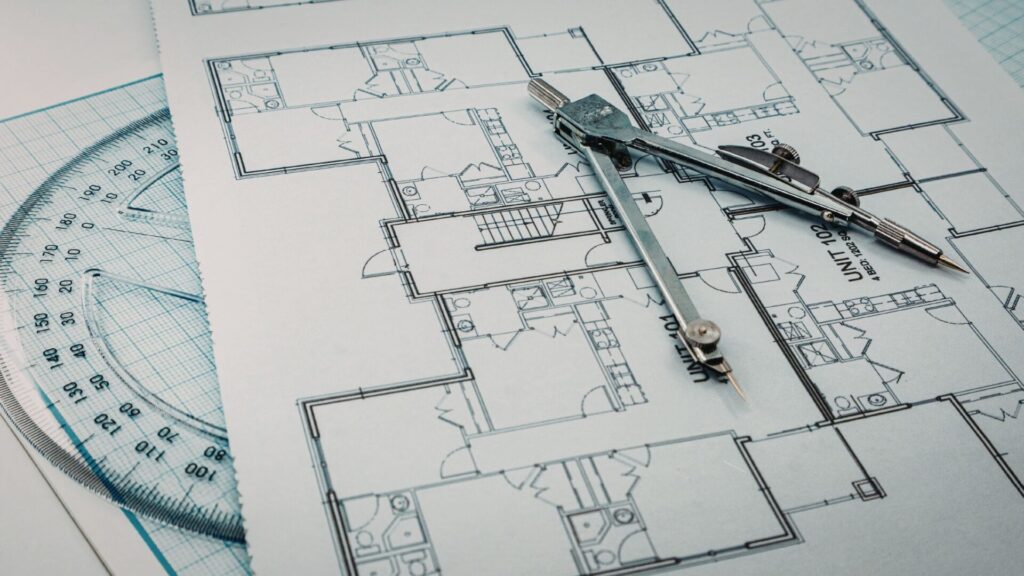
You need an architectural drawing from a registered architect, a structural engineer’s design, and a county building permit before any ground is broken. All contractors in Kenya must be registered with the National Construction Authority (NCA). Verify any contractor’s registration at ncakenya.go.ke before signing any agreement.
Architectural fees typically range from KSh 30,000 to KSh 100,000 for a standard 3-bedroom house plan. Structural engineer fees add KSh 30,000–80,000. County building permit fees vary by county and the value of the development, but budget KSh 20,000–70,000 for approvals.
2. Site Preparation and Foundation — KSh 250,000 to 500,000
This stage is highly variable because it depends entirely on the condition of your land. Site clearing and levelling, excavation for a strip or raft foundation, hardcore filling, blinding concrete, damp-proof course (DPC), foundation concrete, and ground beams are all included here.
The biggest variable is soil type. Normal murram soil allows a standard strip foundation at the lower end of this range. Black cotton soil (common in parts of Nairobi, Machakos, and the Rift Valley) expands when wet and contracts when dry, requiring deeper or wider foundations, or a reinforced raft slab, which can push this stage’s cost significantly higher. A soil test (roughly KSh 15,000–30,000) before foundation design can save you from expensive mistakes.
Current material prices relevant to this stage: cement is approximately KSh 750 per 50 kg bag in Nairobi; ballast runs KSh 1,700 per tonne; machine-cut stones for walling are KSh 20–30 per piece.
3. Walling — KSh 450,000 to 850,000
For most Kenyans, walling means quarry stone (Nairobi stone, bush stone, or machine-cut blocks), which is the most common and cost-effective walling material in most parts of the country. This stage covers stone or block laying from foundation to wallplate height, ring beams at lintel level and wallplate, openings for doors and windows, and rough plaster (scratch coat).
A 3-bedroom house typically requires approximately 2,700 machine-cut stones (6×9) for the walling, at roughly KSh 20–25 per piece in Nairobi. Labour for a skilled mason (fundi wa mawe) runs KSh 700–1,200 per day, plus helpers at KSh 400–600 per day. Walling a 100 sq m house typically takes 4–6 weeks with a crew of 3–4.
4. Roofing — KSh 350,000 to 700,000
Roofing is one of the most visible and consequential decisions in any house build; it protects everything below it. This stage covers the timber or metal roof structure (trusses, purlins, and ridge board), roofing sheets or tiles, fascias, gutters and downpipes, and ceiling boards.
Roofing sheets (mabati) cost between KSh 550 and KSh 1,000 per meter, while box profile sheets run KSh 300–800 per meter. Clay and concrete tiles are more durable and attractive but significantly more expensive than mabati. Stone-coated steel tiles sit in the middle, offering a tile aesthetic at roughly double the cost of plain mabati but with a 50-year lifespan warranty.
Ceiling materials range from affordable hardboard at roughly KSh 450 per sheet (basic) to gypsum boards at KSh 800–1,200 per sheet (mid to high end). Gypsum gives a better-quality finish and is increasingly the standard in urban builds.
5. Electrical and Plumbing Rough-In — KSh 150,000 to 350,000
This is the “hidden” stage that happens before plastering: all the conduits, cables, and pipes that will be buried in the walls and floor. Done correctly, this stage is invisible when the house is finished. Done badly, it requires expensive remedial work later.
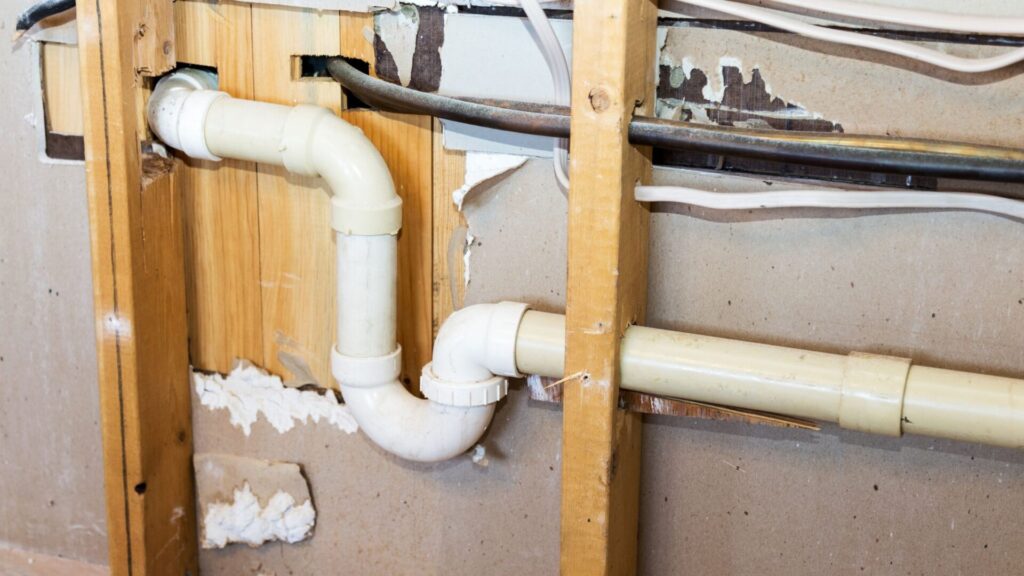
Includes: internal electrical conduit and cabling, plumbing pipes and drainage rough-in, septic tank construction or connection to municipal sewer, and water tank installation with piping. A 10,000-litre plastic water tank costs KSh 15,000–25,000. Septic tank construction runs KSh 50,000–120,000 depending on size and soil conditions.
6. Plastering, Screed, and Tiling — KSh 300,000 to 650,000
This stage transforms the raw structure into a liveable space. It includes internal and external plastering (finishing coat), floor screed, wall and floor tiles in the kitchen and bathrooms, and painting throughout.
Tiles in Kenya range from KSh 1,000 to KSh 3,500 per square meter; basic ceramic tiles at the lower end and imported or large-format tiles at the higher end. For a 100 sq m house, tiling the kitchen, two bathrooms, and the entrance lobby uses roughly 30–50 sq m of tiles. Paint costs KSh 1,200–4,500 per 20-litre bucket depending on quality.
7. Doors, Windows, and Kitchen — KSh 200,000 to 500,000
A standard 3-bedroom house has 7–9 door openings (main door, bedroom doors, bathroom doors) and 10–15 window openings. Door frame and door costs range from KSh 8,000–15,000 per set for basic steel doors to KSh 25,000–50,000 for quality timber or designer doors. Windows and doors cost KSh 15,000–60,000 each for custom aluminum or hardwood fittings.
Kitchen cabinets vary enormously, from basic site-built timber carcasses at KSh 30,000–60,000 to fitted modular kitchens at KSh 100,000–300,000+.
8. Electrical and Plumbing Fittings — KSh 150,000 to 300,000
With conduits and pipes already in place, this stage involves installing all visible fittings: sockets, switches, consumer unit, and KPLC connection; lighting fixtures throughout; sanitary ware (toilet, washbasin, shower or bath) in both bathrooms; kitchen sink and taps; and water heating (solar geyser or standard electric).
Budget KSh 40,000–80,000 for the KPLC application and connection fees depending on location and transformer load.
9. External Works — KSh 100,000 to 350,000
Often underbudgeted, external works include the perimeter fence or wall, gate, driveway or parking area, and basic landscaping. A simple concrete block perimeter fence for a 50×100 plot costs KSh 60,000–150,000 depending on height and finish. A metal gate runs KSh 20,000–80,000. A concrete or paving block driveway adds KSh 30,000–80,000.
Most Affordable Construction Methods in Kenya
If your budget is tight, the standard quarry stone + mabati build is not your only option.
Interlocking Stabilised Soil Blocks (ISSBs): Made by compressing on-site soil with a small amount of cement using a manual or motorised press. The blocks interlock without mortar and produce good thermal mass. ISSBs can reduce walling costs by 30–40% in areas with suitable soil and are increasingly used in government low-cost housing projects.
Hollow concrete blocks: Consistent sizing, faster to lay than quarry stone, and widely available in urban hardware shops. Where stone transport adds significant cost (parts of Western Kenya, the coast, and northern Kenya), hollow blocks are often the more economical choice.
Prefab and EPS panel construction: A 3-bedroom prefab house can cost 20–30% less than a conventional build and constructs significantly faster; a shell can be erected in weeks rather than months. Expanded Polystyrene (EPS) sandwich panels are increasingly used in Kenya for affordable housing; the panels are lightweight, thermally efficient, and require less skilled labour than masonry.
Mabati (iron sheet) construction: A full mabati 3-bedroom house (iron sheet walls and roof on a timber frame) can be built for as little as KSh 600,000–900,000. It is not a permanent structure and requires higher maintenance over time, but for phased builds or temporary housing while a permanent structure is financed, it is a practical option.
Key Building Materials Prices in Kenya (2026)
Use these as a reference when evaluating contractor quotes and sourcing materials directly:
| Material | Price (2026) |
| Cement (50 kg bag) | KSh 650–850 depending on brand |
| Machine-cut stones (6×9) | KSh 20–30 per piece |
| D10 steel rebar (12m bar) | KSh 845–920 per bar |
| D12 steel rebar (12m bar) | KSh 1,240–1,335 per bar |
| River sand | KSh 1,500–2,500 per tonne |
| Ballast / quarry dust | KSh 1,500–2,000 per tonne |
| Corrugated mabati roofing | KSh 550–1,000 per metre |
| Box profile roofing sheets | KSh 300–800 per metre |
| Floor tiles (ceramic, standard) | KSh 1,000–2,000 per sq m |
| Gypsum board (standard sheet) | KSh 800–1,200 per sheet |
| Paint (20-litre bucket) | KSh 1,200–4,500 |
Steel prices in Kenya are volatile and fluctuate based on global demand, import duties, and local mill output. In Western Kenya, rebar prices are typically 10–15% higher than Nairobi due to transport costs. Always get current quotes from at least two suppliers before purchasing.
Hidden Costs Most Builders Overlook
First-time builders routinely underestimate their total project cost because they budget only for the visible stages and miss the following:

Soil test and structural engineer fees. Skipped by many, essential for everyone; particularly if building on black cotton soil or hilly terrain. A soil test costs KSh 15,000–30,000 and determines the correct foundation design. Getting this wrong is extraordinarily expensive to fix.
NCA permit, county approvals, and NEMA fees. These are legally required and must be paid before construction begins. Budget KSh 50,000–120,000 depending on county and project value.
Utility connections. KPLC connection (including application and transformer contribution where required) can run KSh 40,000–150,000+. Water connection to mains, where available, adds KSh 20,000–60,000. A borehole, where mains water is unavailable, can cost KSh 150,000–400,000+ depending on depth.
Materials wastage. Always add 10–15% to your materials quantities to account for wastage, breakages, and the inevitable design modifications that occur on site.
Labour cost escalations. Quoted labour rates at project start often increase as the project progresses, particularly if there are delays. A contingency for labour escalation is wise.
Materials security. Theft of cement, steel, and other materials from unsecured sites is common in urban Kenya. Budget for on-site security or a lockable store from day one.
Contingency fund. Always budget a 10–25% contingency allowance on top of the base estimate. Unexpected ground conditions, price increases, design changes, and weather delays are routine on Kenyan construction projects. A project that begins without a contingency fund almost always stalls or is completed at a lower standard than planned.
Tips to Reduce Construction Costs in Kenya
Build in phases if necessary. Complete the foundation and shell first, then interior finishes when funds allow. Many Kenyans have successfully built this way over 3–5 years, avoiding debt while still building a quality permanent home. The key is ensuring each phase is properly weatherproofed before pausing.
Source materials directly from suppliers. Buying cement, steel, and tiles yourself (rather than through a contractor who marks up materials) can save 10–20% on total material cost. Compare prices at multiple hardware stores, and look for bulk discounts on large orders.
Use locally available materials. Nairobi stone is cost-effective in Central and Rift Valley regions but expensive to transport to the coast. In coastal counties, coral stone and locally made blocks are the cheaper option. Always ask what the regional building material is; it is almost always cheaper than transport alternatives.
Keep your design simple. A rectangular or L-shaped house plan uses materials more efficiently than a house with many projections, curves, or complex roof lines. A simple rectangular design minimises waste and is consistently the cheapest way to achieve a given floor area. Every additional corner on your plan adds cost.
Avoid design changes during construction. Every change order (altering a wall position, moving a door, changing the roof pitch) costs money in rework, wasted materials, and contractor time. Finalise your design completely before breaking ground.
Hire via referral and verify NCA registration. The cheapest quote is not always the best value. A contractor who abandons a project or delivers poor quality workmanship costs far more to remedy than the savings made upfront. Ask for completed project references, visit finished buildings where possible, and verify NCA registration before signing any contract.
Build during the dry season. January to March and July to September are the primary dry seasons in most Kenyan regions. Rain stops concrete curing, washes away mortar, and halts plastering. Scheduling concrete and masonry work for dry periods avoids costly delays and rework.
Frequently Asked Questions
How much does it cost to build a simple 3-bedroom house in Kenya?
A basic 3-bedroom house with simple finishes (plain painted walls, basic tiles in the bathroom and kitchen, corrugated mabati roof) costs between KSh 2.5 million and KSh 3.5 million for a compact 80–90 sq m house in peri-urban or rural Kenya. In Nairobi, even a basic build at 100 sq m will typically start at KSh 3.5 million. These figures exclude land.
Can I build a house in Kenya with KSh 1 million?
KSh 1 million is not enough for a permanent 3-bedroom stone house anywhere in Kenya in 2026. At that budget, you can build a small 1–2 room mabati structure, begin the foundation and walling of a larger house in phases, or construct a simple pit latrine and bore well in preparation for a larger project. KSh 1 million is a down payment on a house, not a house budget.
What is the cheapest way to build a house in Kenya?
The cheapest approach combines: a simple rectangular design; ISSB or hollow concrete block walling where suitable; mabati roofing; basic ceramic tiles and standard paint finishes; owner-managed construction with direct materials sourcing; and phased construction to avoid borrowing. In rural areas with favourable soil and on-site stone availability, this approach can yield a liveable 3-bedroom house for KSh 2–2.5 million.
How long does it take to build a 3-bedroom house in Kenya?
A standard 3-bedroom house takes 4 to 8 months to complete with continuous work and uninterrupted funding. Phased construction can extend this to 12 to 18 months depending on your funding schedule. Weather delays, contractor issues, and materials shortages can extend timelines further. Projects that pause and restart always take longer and cost more overall.
Do I need an architect to build a house in Kenya?
Yes, for a permanent structure, you are legally required to have architectural drawings prepared by a registered architect and approved by the county government before construction begins. Building without approved plans is illegal and can result in a stop-work order or demolition notice. Beyond legality, a good architect produces a design that uses your land and budget efficiently, which more than pays for the fee in most cases.
Plan Your Build With the Right Support
Building your own home in Kenya in 2026 is still one of the most powerful wealth-creation steps available to a Kenyan family, even with rising material costs. The key is planning thoroughly, budgeting realistically, and building with verified professionals.
Before you build, you need land. See our guide on how to buy land near Nairobi for what to look for, and always check land ownership on Ardhisasa before paying a deposit on any plot. If you are buying on a mortgage rather than cash, our guide on best mortgage rates in Kenya covers what banks and SACCOs currently offer for construction and land purchase financing. And if you are looking for affordable plots to build on, our upcoming guide on the cheapest areas to buy land near Nairobi lists the best-value areas within commuting distance of the city. Looking for contractors, hardware suppliers, or construction professionals? Browse the SokoMix classifieds to find and connect with service providers operating near you, or post your own listing for free.