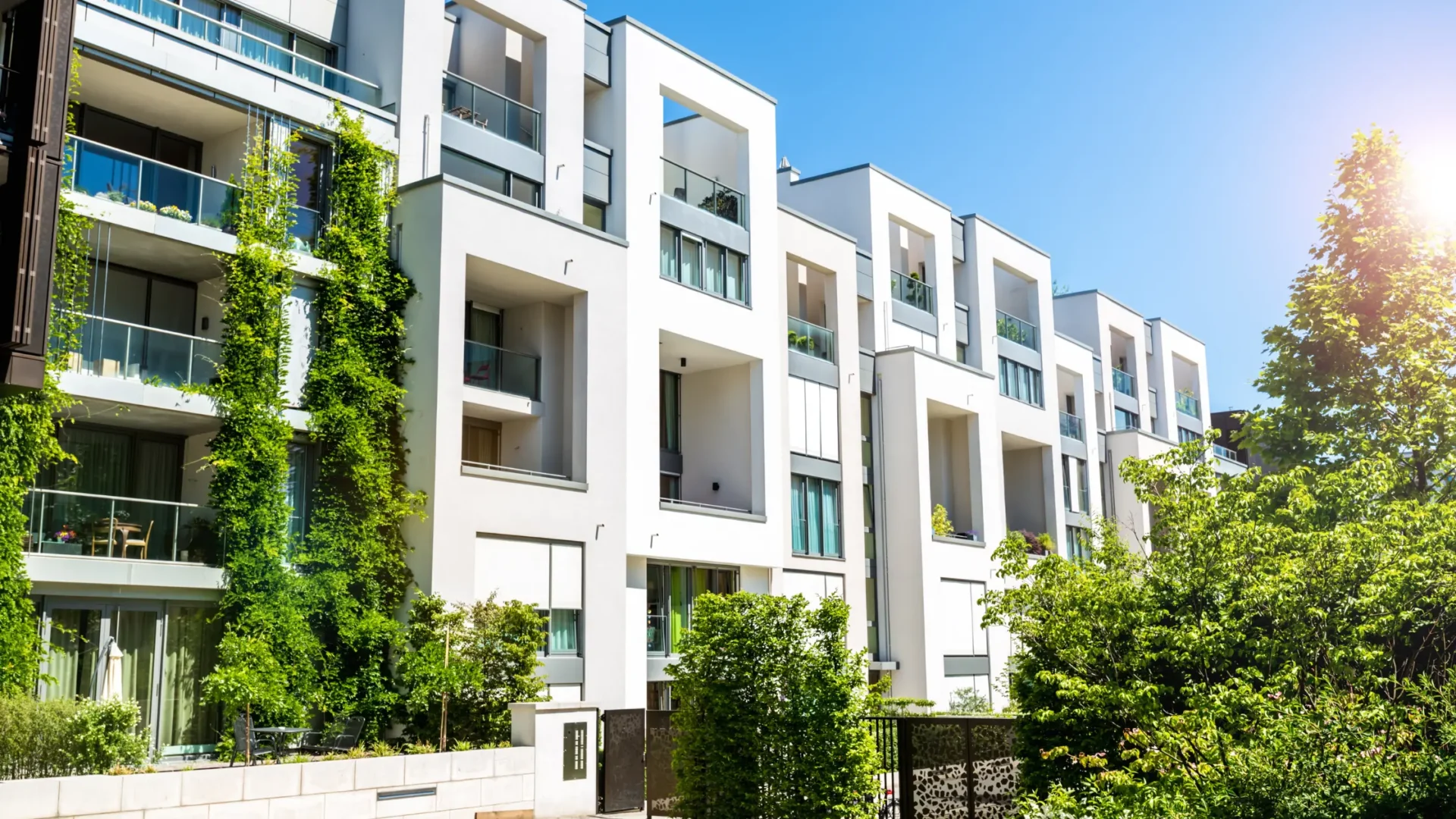

The numbers Kenya’s statistics office released this month settled an argument Kenyans have been having in WhatsApp groups for about a decade. In the apartment vs standalone house in Kenya debate, the two are no longer moving together. The Kenya National Bureau of Statistics puts standalone house prices up 8.5% over the year to the first quarter of 2026, while apartment prices fell 3.0%. That is a fourth straight quarterly drop for apartments and the thirteenth in fifteen quarters.
Quick Answer: If you are buying to live in and hold for years, a standalone house in a satellite town is currently the stronger bet on capital growth, since KNBS has apartment prices falling 3.0% year on year while standalone prices rose 8.5%. If you are buying to rent out, a well-managed apartment near jobs and transport still fills faster and needs less capital to enter. The apartment wins on gross rental yield. The standalone usually wins once you subtract the service charge, repairs, and tax, and it wins clearly on appreciation.
Apartment vs standalone house in Kenya: Which is the better buy?
For most buyers in 2026, a standalone house holds value better, and an apartment produces cash sooner. A KSh 7 million two-bedroom apartment in a Nairobi satellite suburb yields roughly 5.5% gross rent. A KSh 7 million three-bedroom bungalow on an eighth of an acre yields around 6%. After costs, both land near 3% to 4% net, so appreciation, not rent, decides the winner.
That is the honest headline. The caveat matters just as much.
The two questions people merge here are actually different questions. Buying somewhere to live is a lifestyle decision with a financial tail. Buying to rent out is a business decision where the tenant pays the bills. Most guides online answer “it depends on your goals” and stop there, which helps nobody who is about to wire a deposit. So this piece answers both, with the arithmetic shown.
What does the latest KNBS data say about house prices in Kenya?
Kenya’s Residential Property Price Index rose to 118.4 in the first quarter of 2026 from 113.0 a year earlier, annual growth of 4.8%. Standalone houses drove all of it, with their index at 133.6 against 123.2 a year before. The apartment index fell to 88.7 from 91.5, a 3.0% annual decline.
Those index levels matter more than the percentages, and almost nobody quotes them. Both series start from the same base in early 2022. Four years later, standalone houses sit 33 points above where they started and apartments sit 11 points below. These are not two versions of the same asset having a wobbly quarter. They have separated.
The decline is also not evenly spread. According to the KNBS Residential Property Price Index, the steepest apartment falls landed in Nairobi’s high-end neighbourhoods, down about 4.8%, with middle-income estates down roughly 3.3%. HassConsult’s own index for the same quarter found Nairobi suburb prices rising 1.1% while satellite towns fell 0.9% and suburb rents rising 1.3%. Different methodologies, same broad story: the market is sorting itself by property type and location rather than rising as one block.
Why apartment prices are falling while standalone prices climb
Only one of the reasons is about buyer taste, and it is not the biggest one.
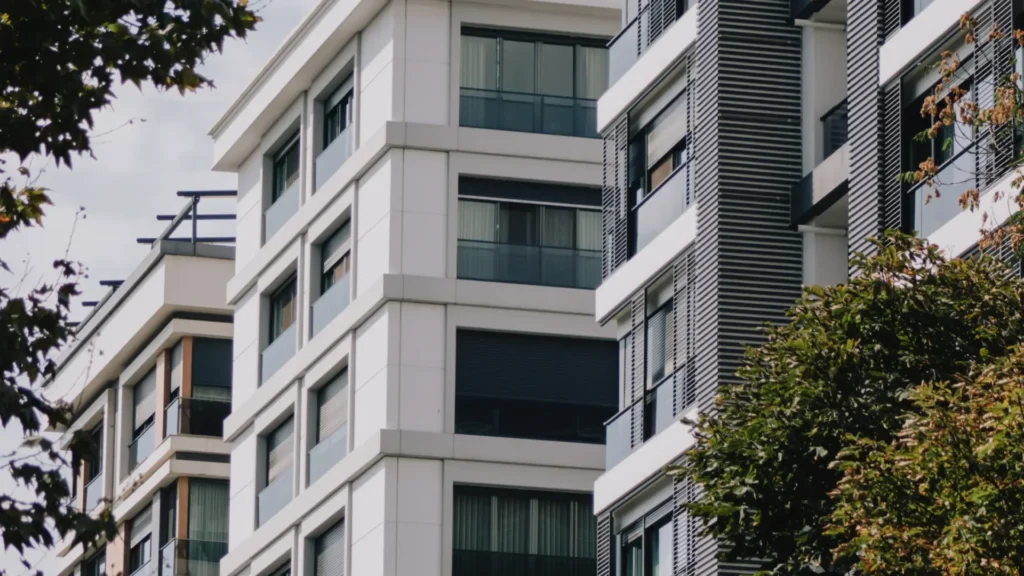
Start with supply. Developers spent the last decade building apartments almost exclusively, because vertical building is the only way to make expensive urban land pay. Kilimani, Kileleshwa, Westlands, Ruaka, Syokimau and Athi River absorbed enormous unit counts. In a market where 63% of prospective homeowners say they want a bungalow, according to KNBS survey work cited by HassConsult, that is a supply and demand mismatch that eventually shows up in price.
What people want from a home also changed. Remote and hybrid work made a longer commute survivable, and it made a spare room worth paying for. A family that would have taken a two bedroom in Kileleshwa in 2019 will look at Kitengela or Ruiru in 2026 and get a compound, parking and a room that can hold a desk.
Then there is the reason people underestimate. When you buy a standalone house you own land, and land is the part of Kenyan property that appreciates. Buildings depreciate. They need painting, roofing, plumbing and eventually rewiring. Buy an apartment and you own a share of a building plus a proportional interest in common property. Your asset is mostly the depreciating half.
That is why the two indices can diverge for years without anything dramatic happening. The underlying assets are not the same thing.
Which one actually earns more rent?
An apartment usually earns more rent per shilling invested, but a standalone usually keeps more of it. On KSh 7 million, a mid market two bedroom apartment yields about 5.5% gross and roughly 3.2% net. A three bedroom bungalow in a satellite town yields about 6% gross and 3.7% net, mainly because it carries no service charge.
I went into this expecting the apartment to win comfortably on yield, because that is what every agency guide says. It does win on gross. It stops winning about four lines into the cost column.
Here is the same KSh 7 million deployed two ways, using realistic 2026 figures for the outer Nairobi metro.
| Two bed apartment, Syokimau or Ruaka type area | Three bed bungalow, Kitengela or Juja type area | |
| Purchase price | KSh 7,000,000 | KSh 7,000,000 |
| Monthly rent | KSh 32,000 | KSh 35,000 |
| Gross annual rent | KSh 384,000 | KSh 420,000 |
| Gross yield | 5.5% | 6.0% |
| Service or estate charge (owner borne) | KSh 54,000 | KSh 24,000 |
| Vacancy allowance | KSh 32,000 (one month) | KSh 17,500 (half month) |
| Rental income tax at 7.5% of gross | KSh 28,800 | KSh 31,500 |
| Letting and management at 8% | KSh 28,000 | KSh 32,000 |
| Repairs and maintenance | KSh 20,000 | KSh 45,000 |
| Land rates | included in service charge | KSh 10,000 |
| Net annual income | KSh 221,200 | KSh 260,000 |
| Net yield | 3.2% | 3.7% |
The apartment starts ahead on gross and finishes behind. Service charge is the main reason. It is a fixed cost that does not fall when your unit is empty, and in a badly run building it climbs every year regardless of what the owners think.
Two honest caveats on that table. Repairs on a standalone are higher and lumpier, because there is no sinking fund and no management company, so a roof or a borehole pump lands on you in one go. And the apartment fills faster in most months, which matters more than the spreadsheet suggests if you are carrying a mortgage.
Now put appreciation on top. On KNBS index movement over the last year, the standalone gained roughly 8.5% in paper value while the apartment lost 3%. On a KSh 7 million asset, that is a swing of about KSh 800,000 in a single year, which dwarfs the KSh 39,000 difference in net rent. Index movement is not a promise about your specific unit, but the direction has held for three years now.
If you want the full mechanics of running a rental as a business rather than a side asset, we covered that in how rental property investment works in Nairobi.
One tax note worth budgeting for. KRA charges Monthly Rental Income tax at 7.5% of gross rent for resident landlords earning between KSh 288,000 and KSh 15 million a year, and it is a final tax with no expense deductions allowed. Treasury proposed returning that rate to 10% during the 2026 Finance Bill process, so confirm the current rate on KRA’s page before you model anything. At 10% the apartment above loses another KSh 9,600 a year and the bungalow another KSh 10,500.
The costs that are not in the brochure
Service charge is where most apartment buyers get surprised, and the surprise is rarely the headline figure. It is the gap between the figure quoted during the sales pitch and what the building actually spends two years later, plus the collection rate.
A block where only 60% of owners pay their service charge still has to run the lift, pay the guards and pump the water. The shortfall gets recovered from the people who do pay. That is how a KSh 30,000 monthly charge becomes KSh 45,000 without anyone voting for an increase. Ask for the last two years of service charge accounts and the current arrears figure before you commit. If nobody can produce them, that is your answer.
Standalone owners swap that for a different bill. Security, water storage, garbage, gate and access road upkeep in a gated scheme, land rates to the county, and every repair with no committee to share it. The costs are lower on average and far less predictable month to month.
Financing sits on top of both. The Central Bank of Kenya has kept the Central Bank Rate at 8.75%, holding it again at its June 2026 meeting, which has pulled commercial lending rates down from the highs of 2023 and 2024. That helps, but not many people are using it. CBK’s most recent Bank Supervision Annual Report counted roughly 30,000 mortgage accounts in the entire country against an outstanding mortgage book near KSh 280 billion. In a country of over 50 million people, that is not a housing finance market, it is a rounding error. Most Kenyan buyers are still paying cash, in instalments, through a SACCO, or building over several years.
If you are comparing lenders, we keep a running look at current mortgage rates from Kenyan banks.
Is buying an apartment in Kenya still a good investment?
Yes, in a narrow band. A two or three bedroom unit in a well managed building near employment and transport still lets quickly and needs roughly half the capital of a comparable standalone. What is oversupplied is the one bedroom and studio segment in Nairobi’s dense apartment corridors, which is where most of the price decline is concentrated.
The word doing the work in that answer is “managed.”
The performance gap between a well run building and a badly run one in the same estate is wider than the gap between apartments and houses as categories. Knight Frank’s Nairobi residential research has vacancy in larger, well managed units in prime suburbs holding under 8%, while tired blocks two streets away struggle. Management quality is a thing you can inspect before buying, unlike the market.
So the apartment case is real, it is just conditional. Buy the building, not the unit. Given the choice, I would take a plain unit in a well run block over a smart unit in a neglected one every time, because you can renovate a kitchen and you cannot renovate a management committee. Walk the common areas on a weekday evening. Look at the lift maintenance sticker. Count how many parking bays sit empty.
Is a standalone house a better investment than an apartment?
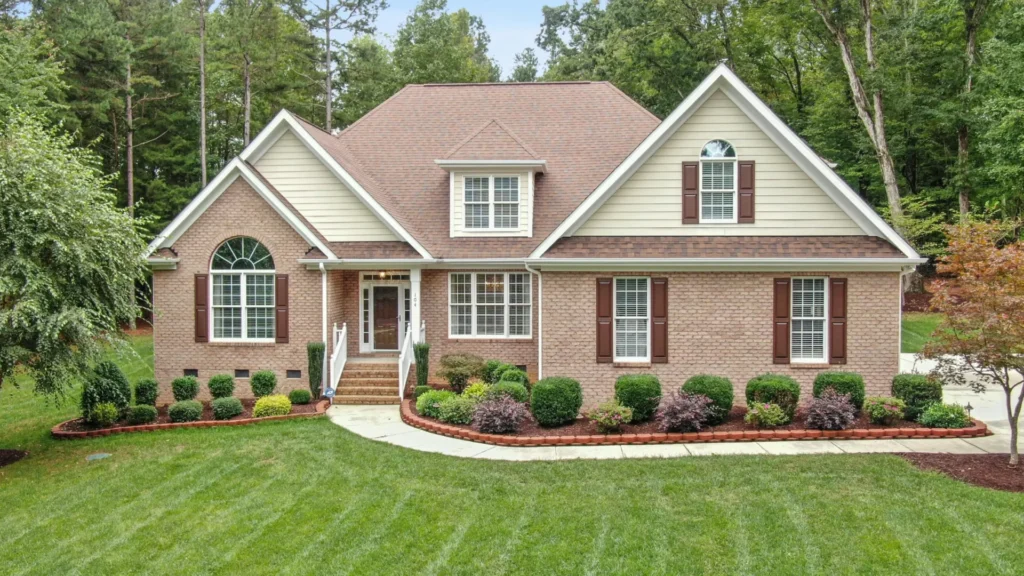
On the current data, yes for capital growth, with two costs attached: you need more money to start, and you cannot sell it quickly. Standalone prices rose 8.5% over the year to Q1 2026 while apartments fell 3.0%, but the strongest growth is in satellite towns where land is still cheap rather than in Nairobi proper.
Liquidity is the trade nobody warns you about. An apartment in Kilimani has a hundred plausible buyers at any given time and a broadly known price per square metre. A bungalow in Kamangu has a much thinner buyer pool, and if you need the money in ninety days you will discover exactly how thin.
There is also a third option people forget. Buying land and building can land you a better house for the same money, if you have the patience and can supervise a fundi. Our breakdown of what it costs to build a three bedroom house has the current figures.
How to choose in seven questions
Answer these honestly and the decision usually makes itself. Count your yes answers on each side.
- Do you need this money back within five years? If yes, lean apartment for liquidity.
- Are you buying to live in it for a decade or more? Lean standalone.
- Is your budget under KSh 6 million? Apartment, realistically, unless you go far out.
- Do you have time and appetite to manage repairs yourself? Standalone.
- Do you want the rent to start immediately with minimal vacancy? Apartment near jobs and transport.
- Do you care more about the asset being worth more in 2031 than about monthly cash? Standalone.
- Are you buying from abroad and cannot supervise anything? Apartment in a managed building, with a property manager on contract.
What to check before you pay any deposit
This is the part that protects the money. The order matters.
- Run a land search. For a standalone, confirm the title, the registered owner and any charges or cautions against the parcel. Our guide on how to run a land search on Ardhisasa walks through the online process.
- For an apartment, ask what title you are getting. This is the single most skipped check in Kenya. The Sectional Properties Act 2020 required long term sub leases that were intended to confer ownership of a flat or maisonette and were registered before the Act commenced to be brought in line with the Land Registration Act within two years of commencement. The Act commenced on 28 December 2020. Plenty of older blocks never completed the conversion, and where a parcel has not been sectionalised the registrar can restrict further dealings on it. If the seller is offering a share certificate or an old company title rather than a sectional title, get an advocate involved before any money moves.
- Demand the service charge accounts. Two years of statements plus current arrears. Also ask what the sinking fund holds. Many buildings have nothing in it.
- Count occupancy yourself. Visit at 8pm on a weeknight and count lit windows. Sales agents quote sold units, which is not the same as occupied units.
- Check the developer’s completed projects, not the renders. Go and look at something they finished five years ago and see how it aged.
- Confirm rates and rent are clear. Outstanding land rates or ground rent transfer with the property and will stall your registration.
FAQ
Which appreciates faster in Kenya, an apartment or a house?
Standalone houses, on current data. KNBS recorded standalone prices up 8.5% in the year to Q1 2026 while apartment prices fell 3.0%. The gap is driven largely by land value, which appreciates, versus building value, which depreciates.
What rental yield should I expect on a Nairobi apartment?
Gross yields commonly land between 5% and 7% in mid market areas. Net yield after service charge, vacancy, management and the 7.5% rental income tax is usually closer to 3% to 4%. Anyone quoting you 10% net is either selling something or ignoring costs.
Is a service charge negotiable?
Not individually. It is set by the management company or corporation based on the building’s budget and your unit’s share. What you can do is inspect the accounts before you buy and vote at owners’ meetings after.
What is a sectional title and why does it matter?
A sectional title is a registrable title to your specific unit plus a proportional share of the common property, issued under the Sectional Properties Act 2020. It matters because it is what lets you transfer, charge or refinance your unit in your own name. Share certificates and old company titles complicate all three.
Are satellite towns a better bet than Nairobi suburbs right now?
For standalone houses, largely yes, because land is cheaper and the demand shift is running that way. HassConsult recorded satellite town prices down 0.9% in Q1 2026 though, so the trend is not uniform. Buy on infrastructure and access, not on the estate’s marketing.
Can I get a mortgage for either type?
Yes, but the title determines how easily. Banks lend against clean sectional titles and freehold or leasehold parcels. An unconverted long term lease slows or blocks the charge, which is one more reason to check the title first.
Should I buy land and build instead?
Often it is the best value per shilling if you can supervise the build and are not in a hurry. You take on construction risk, cost overruns and a two to three year timeline in exchange for a house that fits you and full land ownership.
Where this leaves you
If you are buying to live in and you can afford it, the data currently favours a standalone in a satellite town with decent road access. If you are buying to rent, an apartment in a well managed building near jobs still makes sense, provided you underwrite it at a 3% net yield rather than the gross number the agent quotes.
Whichever way you lean, the next step is the same one: look at what is actually listed at your price point, in your target area, right now. Index numbers describe the market in aggregate. The unit you buy is a specific building on a specific street with a specific management committee. Start by comparing asking prices on SokoMix property listings, then take your shortlist through the six checks above before any money moves.
Property prices and rental yields move, and this article is general information rather than financial or legal advice. Confirm current figures with KRA, CBK and the relevant land registry, and use an advocate for any title work before you commit funds.